
Contrary to what many founders think, scaling a fintech isn’t simply about acquiring customers. It is about building a trusted brand in an industry where credibility, compliance and customer confidence determine long-term success. Over the years, we have worked with fintechs at different stages of growth. Everything from early-stage businesses preparing for market entry to established financial technology brands expanding internationally. Here are the key marketing lessons we have learned from helping fintechs to scale.
But First, The Fintech Stats
- Only 56% of people worldwide trust financial services companies, making it one of the least trusted sectors.
- 20% of new businesses fail within their first year, and around 50% fail within five years.
- Approximately 90% of innovative fintech startups fail over their lifetime, although the figure varies significantly by sector, funding stage and definition of “failure.”
- 42% of startup failures are linked to a lack of market need, making product-market fit one of the biggest reasons companies fail.
- 29% of startup failures are linked to running out of cash, highlighting why customer acquisition, revenue planning and efficient marketing matter from the beginning.
- Customer acquisition cost in financial services is among the highest of any digital sector. Recent industry benchmarks indicate that fintech customer acquisition costs (CAC) for B2B/SMB services range from $500 to over $1,500 per funded customer, with enterprise-focused fintechs experiencing costs as high as $14,772 depending on product and region.
- Fintech startups face additional challenges compared with many other sectors because they operate in highly regulated environments where trust, compliance and operational resilience are critical. Failures in fintech often stem from issues including poor unit economics, weak differentiation, regulatory challenges and inability to scale efficiently.
Speak to us about marketing your fintech.
#1 Build Your Marketing Strategy Before You Scale Your Growth
One of the biggest mistakes we see fintech startups make is investing in marketing activity before establishing a clear strategy. Launching social media channels, publishing blogs and running paid campaigns without a clear understanding of positioning and KPIs often leads to inconsistent messaging and wasted budget.
Before scaling, fintechs need to understand exactly who they are targeting, what problem they solve and why customers should trust them over established competitors. Then we go on to look at how we will convey that message through content marketing.
A strong fintech marketing strategy should define:
- The specific customer segments the business wants to attract and the challenges those customers are trying to solve.
- The brand positioning that separates the fintech from competitors offering similar products or services.
- The key messages that should consistently appear across content, advertising, PR and sales materials.
- The markets and regions that represent the strongest opportunities for growth.
- Direct competitors to watch in the sector and why.
Strategic Action Point
Before investing heavily in customer acquisition, create a market-entry and growth strategy that connects business objectives with marketing activity. The most scalable fintech brands know exactly who they want to reach, what they want to be known for and how they will measure progress. They also consider retention rather than just acquisition. The average 30 day retention for finance apps often sits between 10% and 20%, meaning most users churn within the first month. Multiple UX studies across financial apps indicate onboarding drop off rates of 60% or higher when KYC processes are slow or confusing.
#2 Use Content Marketing To Build Trust Before The Sales Conversation
Fintech customers rarely make decisions based purely on features so these shouldn’t be your made USP. Whether a customer is choosing a payment provider, investment platform, banking solution or financial infrastructure partner, they need confidence before they commit. Content marketing gives fintechs the opportunity to educate audiences and build authority before a sales interaction begins.
The strongest fintech content strategies focus on solving customer problems rather than constantly promoting products and features. Plus, features like “lightning fast execution” and “great customer support” are assumed by most customers in 2026.
Effective content includes:
- Blog content that explains complex financial topics in a way that customers, businesses and decision-makers can easily understand.
- Thought leadership articles that demonstrate expertise and provide valuable perspectives on industry developments.
- White papers and research reports that position the company as a knowledgeable voice within the market.
- Customer case studies that show real outcomes and provide social proof.
- Educational resources that help customers understand regulations, trends and financial challenges.
Strategic Action Point
Build content around the customer journey rather than your product roadmap. The best-performing fintech content answers the questions customers are asking before they are ready to buy.
We think you will enjoy reading The Biggest Fintech Marketing Mistakes.
#3 Create An SEO/GEO Strategy That Supports Long-Term Growth
We get it, many fintechs focus heavily on paid acquisition because it produces immediate visibility. But relying only on advertising can create dependency on increasing budgets and encourage poor retention techniques. SEO provides a long-term growth channel by helping customers discover your brand when they are actively researching solutions.
A successful fintech SEO strategy requires more than publishing occasional blogs. It requires building topical authority.
This includes:
- Creating content around high-value search topics that reflect customer intent.
- Factoring in AI search with GEO content marketing techniques
- Developing educational resources that answer common industry questions.
- Optimising website structures so users can easily navigate between related topics.
- Building authority through credible backlinks, partnerships and industry mentions.
Strategic Action Point
Think beyond ranking for product keywords. The biggest SEO opportunities often come from owning the conversation around the problems your customers face. Think holiday budgeting, retirement FAQs, stress over debt, maternity benefits or paid leave.
#4 Build A Social Media Presence That Humanises Your Brand
Monzo Bank is a fintech that understands its audience. Do we want to talk about your products and features? Not really. Do we want to discuss the weather and BBQs? Yes. Not everything has to be a promotion and successful fintechs learn to be where the conversation is.
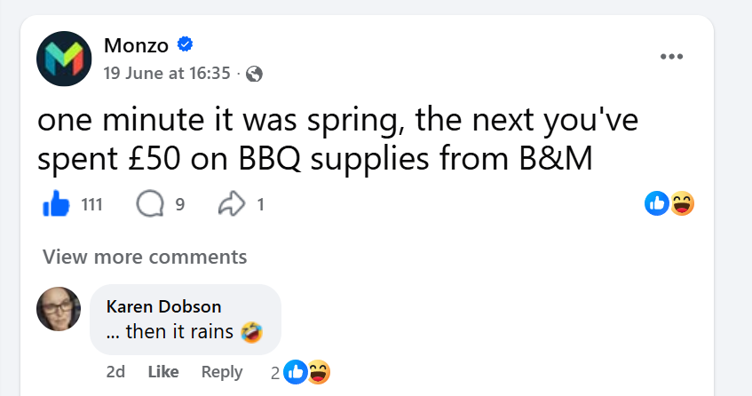
Many fintech brands struggle with social media because their content becomes overly corporate and complicated. Financial technology can be complex, but brands still need to communicate in a human and relatable way, and the strongest fintech social strategies combine education, personality and expertise.
Successful approaches include:
- Sharing insights from company leaders and subject matter experts.
- Explaining industry changes in simple language.
- Showcasing company culture and the people behind the technology.
- Highlighting customer stories and community achievements.
- Sharing failures and how you overcame them.
- Following trending topics around money, budgeting and debt.
Strategic Action Point
Fintech startups often make the mistake of trying to be everywhere. They have X, LinkedIn, Snapchat, Facebook, Instagram, TikTok and YouTube. That’s fine if you have the budget and resources to create unique content for each platform. If not, you will be diluting your message and recycling graphics and videos which doesn’t look great. We recommend fintech startups concentrate their focus and resources on 2 or 3 platforms to begin with. Secure your social media handles for all the channels but don’t connect them to your website. Think about where your audience will be. If it’s B2B investors then LinkedIn and Medium. If it’s Gen Z or Gen A, then TikTok, Reddit and Instagram.
#5 Use PR To Turn Expertise Into Brand Authority
A potential customer may question a company’s own marketing claims, but third-party recognition from trusted publications, industry experts and partners creates a different level of credibility. PR should be used to establish the company as a trusted participant in important industry conversations.
Effective fintech PR strategies include:
- Positioning founders and executives as experts who can comment on market trends.
- Sharing original research that provides valuable insights for media and industry audiences.
- Contributing expert commentary on regulatory changes and financial developments.
- Highlighting partnerships, milestones and innovations that demonstrate market momentum.
Strategic Action Point
The strongest PR strategies are built around expertise, not promotion. Instead of asking us “How can we get coverage?”, ask us “What knowledge can we provide that makes us valuable to journalists and industry audiences?”
#6 Approach Paid Advertising As A Growth Accelerator, Not A Solution
Paid advertising can be extremely effective for fintech companies, but only when supported by strong messaging, conversion journeys and customer understanding. A common mistake is haemorrhaging advertising spend before working out a strategy and funnel. In many cases, fintech startups are so eager to get started that they throw out any old PR in any region just to say they started. Often, they burn through their budget in the first few months seeing little of no meaningful traction.
Successful fintech advertising requires:
- Clear audience targeting based on customer behaviour and intent rather than broad assumptions.
- Professional assessment of media sites and their relevance to your brand and audience.
- Budgeting to ensure performance and consistency in the long term.
- Landing pages that address trust, security and compliance concerns.
- Accurate measurement of customer acquisition costs and long-term customer value.
Strategic Action Point
Paid campaigns amplify your existing strategy so if your message is unclear, increasing budget will simply make inefficiencies more expensive.
#7 Invest In Community To Create Loyalty
Everyone cites Revolut’s growth strategy and their claim that they spent nothing on marketing. The reality is, they spent money and resources to create content, build a strong community and to offer Refer A Friend bonuses. A strong community creates feedback loops, improves retention and turns customers into advocates.
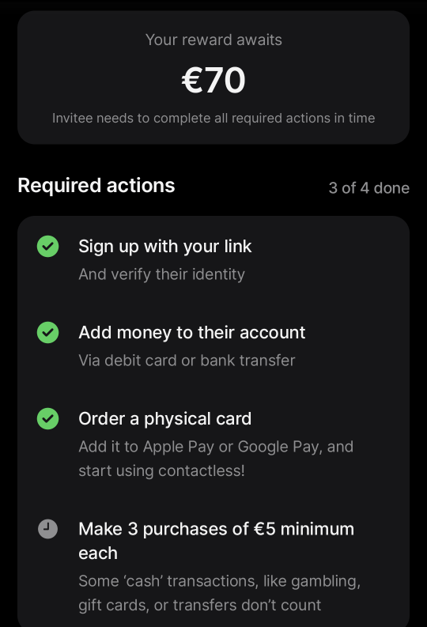
Community-building opportunities include:
- Incentivising with Refer a Friend bonuses.
- Hosting events and webinars that provide ongoing customer value.
- Creating spaces where customers can share experiences and ask questions.
- Encouraging conversations around industry challenges and opportunities.
- Using customer insights to influence product development.
- Sponsoring a team or engaging in CSR community activities.
- Team up with other business that complement your own offering.
Strategic Action Point
The goal of community is creating a group of people who believe in your mission and actively contribute to your growth. You will not achieve this by hard selling your features and benefits or lecturing your audience about why they should bank or trade with you. You audience has a lot of fintechs available to them. You need to nurture and grow your own community and build differentiation and loyalty around your brand.
#8 Protect And Build Your Reputation From Day One
A single negative customer experience, poor review response or unclear communication can influence how prospects view your business. This fintech has averaged 1.3 stars on Trust Pilot and it doesn’t look good for potential customers.
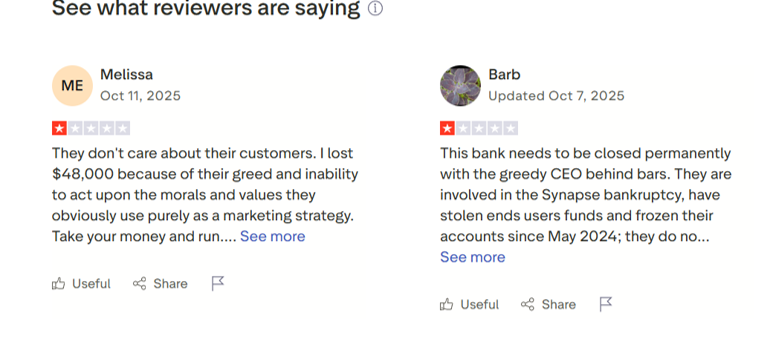
Of course, you should be aiming not to get negative reviews in the first place but reputation management itself should be proactive.
This includes:
- Monitoring online conversations about your brand.
- Responding professionally to customer concerns.
- Encouraging satisfied customers to share experiences.
- Maintaining transparency around updates, challenges and changes.
- Never block or hide legitimate complaints or questions as this fosters community distrust.
- Avoid placing fake reviews, this usually blows up and damages trust in your brand.
Strategic Action Point
Don’t wait until there is a crisis to start managing how your brand is perceived. Regularly run audits on your brand name and key search terms. Monitor community mentions, not only on your channels but on key forums like Reddit.
#9 Adapt Your Marketing When Expanding Globally
Global expansion creates huge opportunities, but it requires more than translating existing campaigns. Different markets have different expectations around financial products, trust, regulation and customer behaviour. This is an area where we see fintech startups come unstuck, especially in niche regions.
Successful international fintech growth requires:
- Research into local needs, challenges and favourite brands or methods of achieving a bank transfer or fintech transaction.
- Localised messaging that reflects regional customer priorities and terminology.
- Understanding local media landscapes and industry influencers.
- Adjusting campaigns based on regional data and feedback.
Strategic Action Point
Sometimes we say, fintechs are marketing to a gap that doesn’t exist. Understand the realities of a region and work with them rather than imposing your own product USPs onto it.
Key Lessons For Fintech Founders
- Many fintechs fail because they build technology before validating whether customers have a strong enough need to adopt it.
- In financial services, customers need confidence in your security, compliance and expertise before they commit.
- The strongest fintech brands build awareness, credibility and communities before they aggressively scale customer acquisition.
- Growing quickly without understanding acquisition costs, retention rates and customer lifetime value can create unsustainable growth or even failure.
- A fintech that succeeds in one market may struggle elsewhere without adapting messaging, partnerships and customer education strategies.
- The fintech brands that successfully expand globally understand that content, PR, advertising, social media, community and reputation are not separate activities. They are interconnected parts of a growth engine.
Ready to start scaling your fintech? Book a free Zoom with our team for an appraisal of your marketing strategy.