
The financial services space has never been more competitive. Consumers now research investment platforms on YouTube, discover budgeting strategies on TikTok, compare banks in Facebook groups, and validate credibility through LinkedIn thought leadership. In this environment, social media is central to trust, acquisition, and long-term growth. Join us for a platform by platform look at what works for financial social media marketing.
Compliant Social Media Management
Financial products are complex and regulated, which makes social media for finance fundamentally different from mainstream consumer marketing. Every post and image must be clear, fair, and not misleading. Claims must be balanced with risk disclosures. Messaging must reflect audience sophistication and jurisdictional requirements. A wealth management firm targeting high-net-worth individuals will require a measured, research-led LinkedIn and YouTube strategy with carefully framed commentary. However, a fintech app targeting Gen Z may prioritise TikTok and Instagram with short-form educational content that still avoids exaggerated returns or implied guarantees. Effective social media for finance therefore depends on structured governance including documented social media policies, pre-approval workflows, content archiving systems, comment moderation protocols, and crisis communication frameworks.
Did you know that FINRA fined M1 Finance $850,000 for failing to properly supervise and review posts made by paid influencers on social media that contained exaggerated, misleading claims about the firm’s services, underscoring the regulatory risks of unsupervised social media marketing in finance.
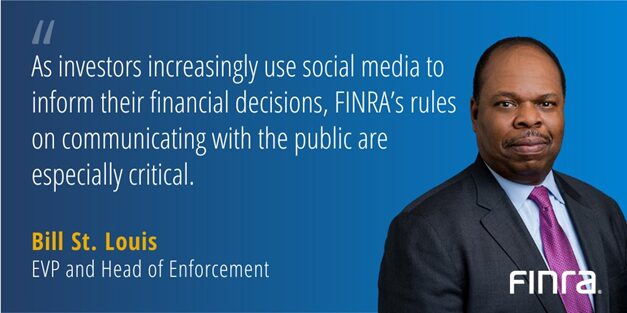
At Contentworks Agency we specialise in compliant social media for finance, combining creative strategy with deep regulatory understanding. We work exclusively with financial brands, ensuring that every script, post, and comment response aligns with financial rules across global jurisdictions. Now, enough about us, let’s look at the best social media platforms for finance.
TikTok: Fast Growth, Fast Education, Fast Attention
TikTok has surpassed 1.5 billion monthly active users globally and continues to dominate among Gen Z and younger millennials. Users spend close to an hour per day scrolling short videos, and financial content has carved out a significant niche through “FinTok” creators discussing investing, saving, credit, and side incomes. For brands investing in social media for finance, TikTok represents a top-of-funnel awareness engine rather than a direct conversion platform.
Did you know that financial content on TikTok, often tagged under hashtags like #FinTok has exploded in both volume and engagement, with billions of views of finance and investing videos. Users spent an average of 416 hours per year watching financial content in 2025.
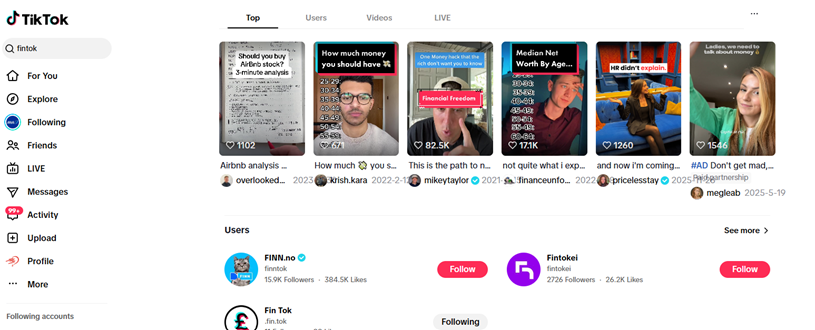
Pros for Financial Services
- TikTok has the highest engagement of all the social media platforms ranging from 8% to 15%, depending on the virality of the content.
- TikTok’s algorithm rewards engagement over follower count, meaning new or smaller financial brands can achieve massive organic reach if their content resonates. This levels the playing field compared to traditional media.
- The platform is highly receptive to educational explainers. Short, punchy breakdowns of compound interest, ETFs, credit scores, or mortgage basics perform well when structured clearly.
- Production barriers are relatively low. Authentic, well-lit smartphone videos often outperform overly polished corporate content.
- It is relatively inexpensive to boost or promote videos
- TikTok also allows financial brands to humanise themselves. Showing real advisors, founders, or analysts explaining concepts builds relatability and reduces the intimidation factor associated with finance.
Cons for Financial Services
- User intent is typically entertainment or casual learning, not immediate financial product purchase. Conversion rates may therefore be lower than platforms with higher commercial intent.
- Content demands are intense, so finance brands need consistent, frequent publishing to remain visible.
- Compliance review can slow trend participation. Financial claims, projections, or advice must be accurate and balanced, which can conflict with TikTok’s rapid content cycles.
- Overly corporate or promotional messaging is often rejected by the algorithm and the audience.
- Certain regions do not permit influencers to talk about financial services products- China is a recent example of this.
What Finance Brands Need to Succeed on TikTok
- Success requires the ability to produce short, engaging videos with strong hooks in the first few seconds. Brands must develop repeatable scripting frameworks that simplify complex financial topics into digestible segments.
- Community management is key because comments often contain financial questions that require thoughtful, compliant responses.
- A fast but robust compliance workflow ensures educational value without regulatory risk.
- Consistency is non-negotiable because brands that post regularly and maintain a recognisable format see stronger algorithmic performance.
- TikTok works best as an awareness and education channel within a broader social media strategy.
X: Real-Time Authority and Market Conversation
X remains a hub for real-time news, financial commentary, and public discourse, with more than 500 million users globally. It is widely used by journalists, economists, traders, analysts, and policymakers. For financial brands, X is less about entertainment and more about breaking news, market moves and analysis.
Pros for Financial Services
- The platform excels at real-time engagement. Financial brands can comment on interest rate changes, market volatility, earnings announcements, or regulatory developments in real time.
- Finance brands can follow and Retweet key analysts and market news sites like Bloomberg.
- Thought leadership performs well, particularly when executives share concise insights or data-backed commentary. Strong executive voices can significantly elevate brand credibility.
- X provides opportunities for media amplification, as journalists frequently source expert commentary from posts.
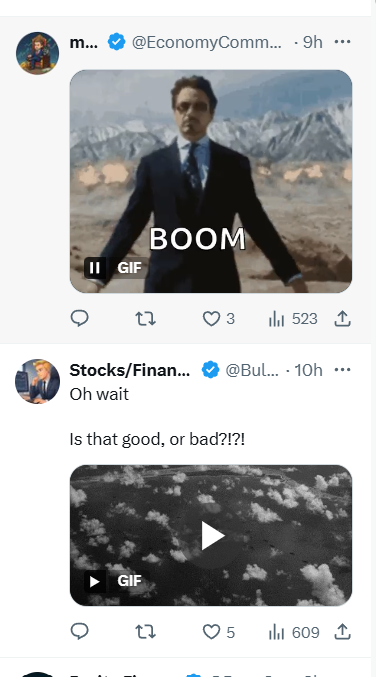
Serious finance brands like Investing.Com know how to get engagement on X.

Cons for Financial Services
- Since Musk took over, the platform now prioritises paid users in terms of visibility and engagement.
- The blue tick no longer represents a legitimate brand and can be purchased, thereby weakening the authenticity of your messaging.
- The platform can be noisy, and financial messaging competes with political and controversial discussions.
- There are a lot of bots on the platform, so you need to be present daily to block them or remove your brand from inappropriate tagged conversations.
What Finance Brands Need to Succeed on X
- Daily engagement with other brands and users is important if you want to get seen. This may be commenting, retweeting or liking posts.
- Answering journalists swiftly will increase your chances of being cited, and will help to build a long term relationship between you and the media.
- A clearly defined brand voice aligned with compliance policies is essential. Social listening tools help identify trending topics and potential risks.
- Brands need rapid response protocols for both customer support and reputational issues.
- X is a fast moving platform so logging in once a month to post, just won’t cut it.
Instagram: Visual Storytelling for Financial Literacy
With more than 2 billion monthly active users, Instagram continues to perform strongly among users aged 18 to 34. Reels, Stories, and carousel posts dominate engagement. For finance brands, Instagram bridges lifestyle and education.
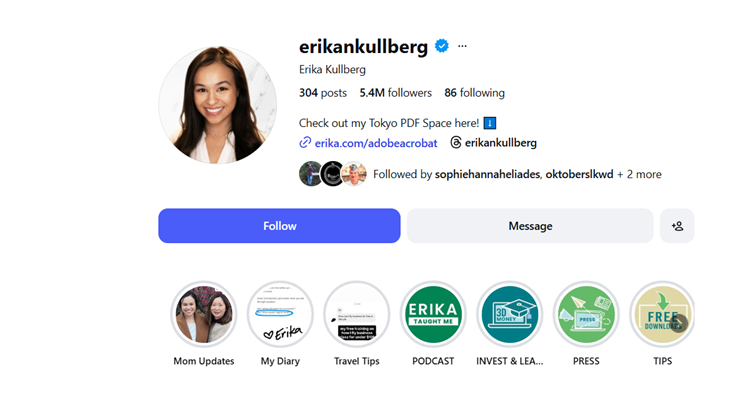
Did you know that some of the top finance Instagram accounts, like @erikankullberg, @your.richbff, and @casper.capital, have built massive followings by turning complex personal finance concepts into simple, engaging visuals and videos, showing how educational content can thrive in social media for finance?
Pros for Financial Services
- Well designed carousel posts that break down financial processes step by step often generate high saves and shares, indicating educational value.
- Reels expand reach beyond existing followers and support awareness campaigns.
- Instagram’s integration with Meta Ads provides detailed targeting capabilities, including demographic and behavioural segmentation.
- Behind-the-scenes content, team introductions, and testimonials help humanise financial brands and build trust.
Cons for Financial Services
- Boring JPEGS and Pitch Deck slides don’t work as well as photos. Ensure your team is willing to share photos of events, office life and even food moments!
- Organic reach for static content has declined, making paid ads increasingly necessary.
- Design expectations are high. And poorly designed visuals undermine credibility in a trust-sensitive sector.
- Complex financial topics may require multiple posts or cross-platform integration to explain fully.
What Finance Brands Need to Succeed on Instagram
- Strong visual branding and cohesive design templates are critical. Educational carousels should simplify information clearly without overwhelming the audience.
- A consistent publishing schedule keeps engagement steady, while paid amplification supports growth.
- Instagram works particularly well for mid-funnel engagement and brand affinity in social media for finance campaigns.
Facebook: Scale and Conversion Power
Facebook remains the largest social platform globally, with over 3 billion monthly active users. Its strongest demographic includes users aged 40 and older, aligning well with products such as mortgages, insurance, retirement planning, and wealth management. For many brands, Facebook delivers one of the highest returns on ad spend among social channels.
One of the most followed and influential finance brand pages on Facebook is Capital One, with around 4 million followers. The brand posts daily using a mix of financial education, community giving campaigns, and fun tips and finance hacks to build traction.

Pros for Financial Services
- The platform’s reach is unmatched, especially among established professionals and homeowners.
- Its advertising system offers sophisticated targeting tools including custom audiences and lookalike modelling.
- Lead generation ad formats reduce friction and can improve conversion rates for consultations or account signups.
- Facebook Groups provide opportunities for building engaged communities around financial topics.
Cons for Financial Services
- It’s a platform with an older reach, so younger focused fintechs or crypto exchanges might not find their target audience there.
- Organic reach is limited, requiring sustained investment in paid campaigns. According to Facebook, the average organic reach rate is between 1.37% and 2.2% although we note it is lower for financial services pages.
- Ad costs can increase in competitive financial niches such as insurance and trading platforms.
- Facebook is notorious for banning finance ads, often without reason or explanation. This requires you to be cautious about the wording and images you use at all times.
What Finance Brands Need to Succeed on Facebook
- Clear audience segmentation and creative testing are essential. Financial brands should integrate Facebook advertising with CRM systems for accurate tracking.
- Educational landing pages improve ad performance and conversion rates.
- Facebook remains one of the most powerful acquisition channels in a comprehensive social media for finance strategy.
LinkedIn: B2B Authority and Executive Influence
LinkedIn has over 900 million members and is widely regarded as the leading platform for B2B marketing. In financial services, it is indispensable for institutional firms, enterprise fintechs, advisory firms, and commercial banking.
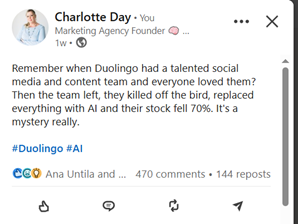
Contentworks Agency Director Charlotte is a LinkedIn thought leader with a humourous and unconventional take on content creation, finance, AI and sometimes cats!
Pros for Financial Services
- The platform provides direct access to decision-makers including CFOs, procurement leads, and executives.
- Lead quality is often significantly higher than other platforms, even when cost per lead is higher.
- Long-form posts and data-driven insights perform well in a professional context.
- LinkedIn reinforces authority and credibility, particularly for complex financial services.
Cons for Financial Services
- Advertising costs are a lot higher than most other platforms. LinkedIn advertising typically costs $2.00–$3.00 per click (CPC), $5.00–$8.00 per 1,000 impressions (CPM), and $0.26–$0.50 per send for Message Ads. This puts it out of reach for many finance and fintech startups.
- Growth requires consistently high-quality content, thought leadership input and B2B focused whitepapers and case studies.
- Overly promotional corporate content tends to underperform whereas insightful, humorous or trending content thrives.
What Finance Brands Need to Succeed on LinkedIn
- Subject matter experts should publish insights regularly. Research reports, whitepapers, and data-driven commentary strengthen credibility. If you cannot produce them inhouse, speak to an agency like Contentworks to create them for you.
- Employee advocacy programs expand organic reach but only if they’re orchestrated in a mutually beneficial way. Never force employees to promote your brand!
- For B2B finance brands, LinkedIn often represents the highest impact channel.
YouTube: Evergreen Search and Long-Term Trust
YouTube reaches more than 2.5 billion users monthly and functions as the world’s second largest search engine. Financial queries generate millions of views, from beginner investing guides to retirement planning explainers. YouTube Shorts now complement traditional long-form content, offering both discovery and depth.
YouTube Shorts perform best when videos are under 60 seconds, with the most engaging clips often around 15–30 seconds. Top finance Shorts begin with a strong hook, using clear captions, including risk disclosures where necessary, and ending with a concise call to action to drive engagement.

Learn how to increase subscribers on your financial YouTube channel.
Pros for Financial Services
- Videos optimised for search can generate traffic for years, providing strong long-term ROI.
- Finance brands can create short videos to explain core education topics. These can sit in autoplay playlists to help with onboarding.
- Long-form video builds authority and allows detailed explanations of complex products.
- YouTube influences mid- to bottom-funnel decisions, as consumers research thoroughly before committing to financial products.
- The combination of Shorts and full-length videos supports both awareness and deeper engagement.
- Multi language captions can be uploaded to assist with regional reach.
Cons for Financial Services
- Professional production standards are expected, requiring investment in lighting, sound, and editing. The same applies for podcasts.
- Channel growth takes time and consistent publishing, finance brands expecting to grow an instant audience will be disappointed.
- Compliance oversight is essential, especially for advisory content.
What Finance Brands Need to Succeed on YouTube
- A structured content calendar built around high-volume financial search topics is essential.
- If you do not have an inhouse videographer, talk to us about a series of professionally made videos. We can script and create your animated or live videos and advise on social media promotions.
- SEO optimisation for titles, descriptions, and tags improves discoverability.
- Strong calls to action guide viewers toward consultations, downloads, or account registration.
- YouTube is one of the most powerful channels for finance marketing. Your YouTube videos can be shared on social media, embedded into blogs and landing pages or sent in emails.
Buzz Without the Compliance Breach
TikTok and Instagram may build awareness and relatability, Facebook may drive scalable acquisition, LinkedIn may establish B2B authority, YouTube may generate long-term trust, and X may support real-time positioning. But none of these channels operate outside regulatory oversight. Every post, video, ad, and comment is a regulated communication that must be clear, fair, balanced, and properly documented. Growth only becomes sustainable when creativity is supported by structured compliance frameworks.
We start with a social media strategy which aligns your business KPIs, resources and target audience with the right social media platforms, content and creatives. If you want expert support creating compliant, high-performing social media content, book a free call with our team.