
Content strategy gets the budget, but technical SEO gets the blame when your pages fail to rank. That imbalance can be especially costly for financial services, where sites are larger, more regulated and structurally more complex than almost any other industry. This is also the sector where the cost of invisibility can mean a lost customer, not just lost pageviews.
The stakes have also changed. It’s no longer just about aiming to be among the Top 10 links on the SERP (search engine results page). The AI Overview has become a prominent section. The financial sector witnessed the highest growth in commercial intent queries that triggered AIOs, rising 231% in the six months to June 2026. Moreover, the baseline for “technically sound” keeps rising. As of January 2026, only 55.7% of websites passed all three of Google’s Core Web Vitals thresholds simultaneously.
If your technical foundation can’t get a page crawled, rendered and understood cleanly, it’s not just missing rankings. It’s missing being shown in AI search results. We’re digging into technical SEO for financial services.
Table of Contents
Why Does Technical SEO Matter More for Finance Firms?
Multilingual, Multi-Jurisdictional Footprints
Technical SEO for GEO and LLM Visibility
Machine-Readable Trust Signals
What Technical SEO Issues Should Finance Firms Actually Check?
Orphaned or single-linked archive pages
Duplicate titles and H1s across paginated category archives
Missing H1s on legal, disclaimer and about pages
Nofollow tags applied to internal links
Unminified, uncompressed, oversized CSS
Broken and redirected external links
What is the Role of Site Architecture and Internal Linking?
How to Manage International SEO?
Why do Core Web Vitals Matter?
Is Mobile-First Better Than Mobile-Responsive?
How Often to Refresh Technical SEO and E-E-A-T?
How to Run a Technical SEO Audit for a Finance Website?
Step 2: Cross-Reference Crawl Data Against Log Files
Step 3: Audit Indexation Status
Step 4: Review Canonical and Hreflang Implementation
Step 5: Test Core Web Vitals at the Page-Type Level
Step 6: Audit Structured Data Coverage
Step 7: Mobile Rendering and Interaction
Step 8: Map Internal Linking Gaps
Step 9: Prioritise Findings by Business Impact
Technical SEO Checklist for Finance Firms
What Does Contentworks Do During a Technical SEO Audit?
What Is Technical SEO?
Technical SEO is everything that determines whether search engines and LLMs (large language models, like Gemini, ChatGPT and Perplexity) can find, crawl, render, index and correctly interpret your site. This includes architecture, speed, mobile experience, structured data, canonicalisation, internationalisation and the machine-readable signals that sit underneath your content.
Technical SEO has been around for a long time, but what has changed is who’s accessing this part of SEO. Today, it isn’t only Googlebot parsing your markup. It’s also about an LLM deciding whether your page is trustworthy enough to cite in an answer. This depends on whether the underlying structure of your page is clean enough to be visible and understood by AIOs or ChatGPT.

Why Does Technical SEO Matter More for Finance Firms?
Almost nothing about a financial services website is simple.
Scale and Depth
Brokers, banks and asset managers routinely run sites with thousands of URLs: instrument pages, market pages, regional product variants, legal disclosures, KYC and onboarding flows, educational hubs, and campaign landing pages that outlive their promotions by years. A multi-asset broker can have thousands of instrument and market pages alone, each one a candidate for thin content, duplication, or crawl waste if it isn’t managed carefully.
Content Compliance
Educational content, commercial content and compliance content (risk disclosures, regulatory notices) all live on the same domain, often the same subfolder, and Google has to work out which is which. Get the architecture wrong and your highest-intent commercial pages end up competing with your own educational content for the same keywords, or worse, a legal disclaimer page outranks the product page it’s attached to.
Multilingual, Multi-Jurisdictional Footprints
A broker regulated in the UK and marketing in the UAE, Southeast Asia and Latin America isn’t running one website. They are running several, in different languages, under different regulatory constraints, often with different entity names attached to different regions. Each variant needs its own crawl path, its own hreflang signals (HTML attributes that tell search engines the language and regional target of a specific webpage), and its own canonical logic. Without this, search engines start showing the wrong regional page to the wrong audience.
Legacy Infrastructure
Financial brands are disproportionately likely to be running on aging CMS platforms that weren’t built with modern rendering or Core Web Vitals in mind, retrofitted after a merger, a rebrand or a regulatory-driven re-platform. Add heavy JavaScript frameworks for interactive tools (calculators, live pricing widgets, comparison tables), a stack of tracking and consent scripts required for compliance and a history of migrations that were never fully redirected, and you get sites carrying years of unresolved technical debt.
None of this is hypothetical. At Contentworks, we’ve seen it directly across forex and prop trading clients. Legacy platform limitations, orphaned legal pages and duplicated instrument URLs are the norm, not the exception, in this sector. Legacy platforms are limited because CMS templates usually can’t output clean canonical tags without custom development, plugin stacks bolted on over years tend to balloon page weight, pagination systems generate infinite near-duplicate category URLs and rigid architectures, where adding a single new regional folder requires a developer sprint rather than a content update. The result is technical debt that compounds with every new product launch.
Technical SEO for GEO and LLM Visibility
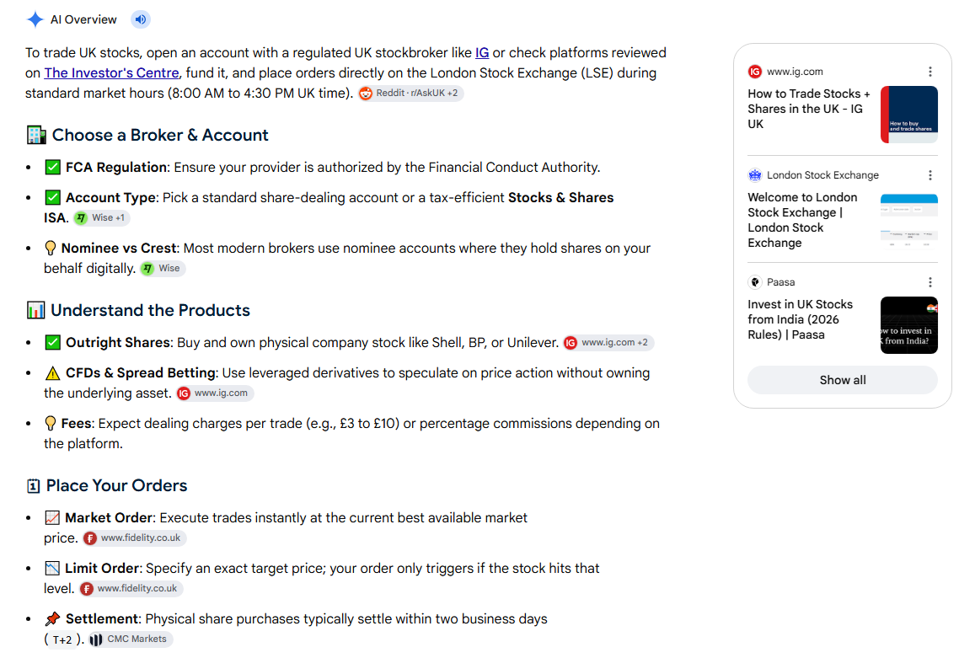
The financial services AEO data highlights that financial education and comparison platforms, rather than banks and brokers, are winning the AI citation war. Nerdwallet.com (10.14%) and Bankrate.com (8.47%) are the most-cited domains in the financial services subindustry, with NerdWallet, PayPal and Bankrate leading brand mentions overall. These aren’t necessarily more authoritative businesses than the banks and brokers they are outranking in AI answers, they’re just better structured for AI retrieval.
That’s the practical difference between SEO and AEO/GEO for finance:
Entity Clarity
LLMs need to resolve who you are, what you’re regulated to do and where, without ambiguity. Organisation schema, consistent NAP (name, address, phone) data, author entities and a clean “sameAs” trail linking your site to verified profiles all feed this.
Extractable Structure
Direct answers, defined terms, clear headings and short, self-contained paragraphs get lifted into AIOs and chat answers far more easily than dense narrative copy. Search Engine Land data shows a 3x faster citation loss rate for pages that aren’t updated on a quarterly basis. Freshness is becoming indispensable for sustained AI visibility, not a nice-to-have.
Machine-Readable Trust Signals
Interestingly, the pattern flips for banking-specific queries. None of the top publisher domains show up as leaders in the banking subindustry, which is instead led directly by td.com (TD Bank) and chase.com (JPMorgan Chase), suggesting AI models go straight to the primary institution as the “source of truth” for account-specific questions. They rely on third-party publishers for broader YMYL (Your Money Your Life) advice. The lesson: your product and account pages need their own technical rigour, not just your blog.
Corroboration
AI systems increasingly check for agreement across independent sources before citing a brand confidently. This means your finance firm’s technical SEO and your digital PR now feed the same outcome.
What Technical SEO Issues Should Finance Firms Actually Check?
Run through these with your own site open. Most finance sites fail at least three.
Orphaned or single-linked archive pages
Monthly “results” or performance-history pages are a classic finance-content culprit. Each new month gets published, linked from nowhere except a dropdown or a sitemap, and ends up with zero or one inbound internal link. Search engines can only find these via the XML sitemap, which means they’re structurally starved of authority even when the content itself is fine.
Duplicate titles and H1s across paginated category archives
Category and tag pagination (/category/forex-pairs/page/2/, /page/3/, and so on) routinely ships with an identical title tag across every page in the sequence. Google can’t tell which page is meant to rank for the category term, so none of them do particularly well.
Missing H1s on legal, disclaimer and about pages
Although these pages exist more for compliance than ranking, a missing H1 still signals a poorly structured page. And if that page is ever cited for E-E-A-T (Google checks pages on Experience, Expertise, Authoritativeness and Trustworthiness) purposes, such as author bios, regulatory disclosures, etc., the missing heading makes it harder for both crawlers and LLMs to parse.
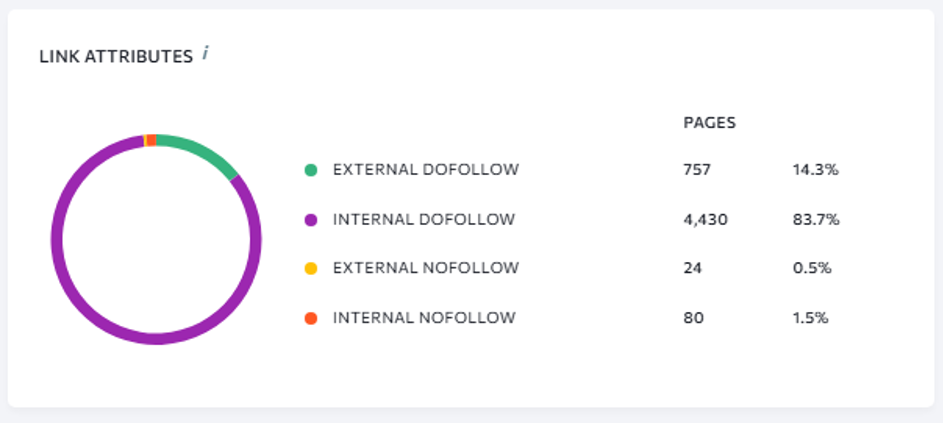
Nofollow tags applied to internal links
This shows up more often than it should. Internal links tagged rel=”nofollow” stops link equity flowing to the pages they point to and can create indexing gaps on pages that otherwise deserve to rank.
Unminified, uncompressed, oversized CSS
Finance sites carrying years of accumulated theme and plugin CSS routinely exceed 150KB on a single stylesheet, with no server-side compression configured. This is a direct, measurable drag on load time and Core Web Vitals (explained below).

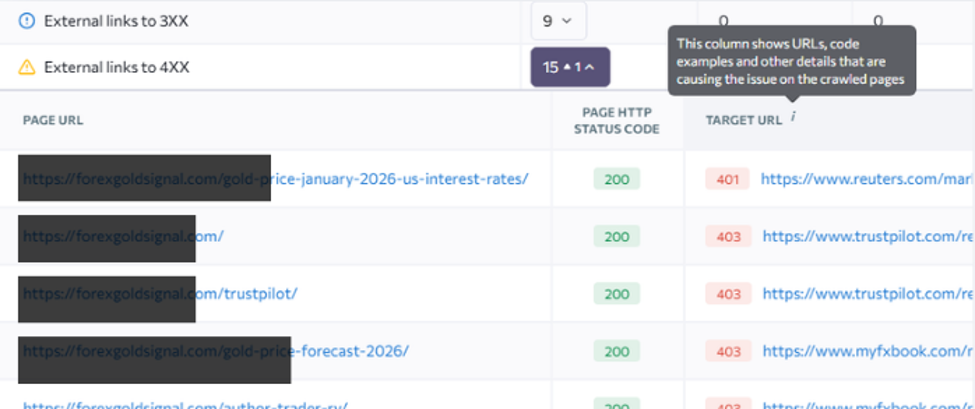
Broken and redirected external links
Outbound links to broker reviews, regulator pages or third-party tools that have since moved (3XX) or died (4XX) erode trust signals on the page they sit on. They are easy to let slide on content that hasn’t been revisited in a year or more.
Curious about your AI visibility? Ask Contentworks about a GEO audit.
What is the Role of Site Architecture and Internal Linking?
A financial site’s architecture should make three things obvious to a crawler within a few clicks: what you sell, what you teach and how those two connect. In practice, most don’t.
The fix is topical clustering, or grouping content into pillar-and-cluster structures where a core commercial page (a product or account type) links out to supporting educational content, and that educational content links back. A page on “what is margin trading” should link to your margin account product page and to related educational content on leverage, risk and liquidity, not sit as an isolated blog post with no path back to conversion.
One point that gets misunderstood constantly is that duplicate content is not automatically a penalty. Google’s own guidance is explicit that duplication across pages doesn’t itself trigger a manual action. The real risk is poor canonicalization. That is when Google can’t confidently determine which of several similar URLs should be the one shown in results. At such times, it makes that decision for you and doesn’t always choose the version you’d want to rank. For a broker running the same instrument page across three regional folders with weak or missing canonical signals, that’s a real, recurring risk.
How To Manage International SEO?
Every multi-jurisdiction financial brand faces this decision, usually later than it should.
Country subfolders (domain.com/uk/, domain.com/ae/) consolidate domain authority into a single property, which is generally the strongest option for a brand building topical authority across markets from one entity. It’s also the easiest to manage technically.
Subdomains (uk.domain.com) offer more separation and are useful where different regions are run by genuinely separate regulated entities with different content and legal requirements. But they also historically dilute authority signals compared to subfolders, and add crawl and management overhead.
Separate ccTLDs (domain.co.uk, domain.ae) send the strongest local-relevance signal and are sometimes a regulatory necessity for licensed entities operating under distinct local approvals. But they start from zero authority and require the most ongoing SEO investment to build up independently.
There’s no universally correct answer. The decision should follow your regulatory structure first and your SEO ambitions second. What matters technically, whichever model you choose, is consistent hreflang implementation across every regional variant, canonical tags that don’t fight your hreflang signals and a clear content governance process so regional teams aren’t publishing duplicate or conflicting pages independently.
Why Do Core Web Vitals Matter?
Core Web Vitals are a set of metrics defined by Google that measure real-world user experience for loading speed, responsiveness and visual stability on a webpage. These function as a tiebreaker: when multiple pages offer similar content quality and authority, the site delivering superior user experience gains the decisive advantage. In a sector as competitive as finance, most of your competitors are near-identical on content quality. The technical layer is often the actual differentiator.
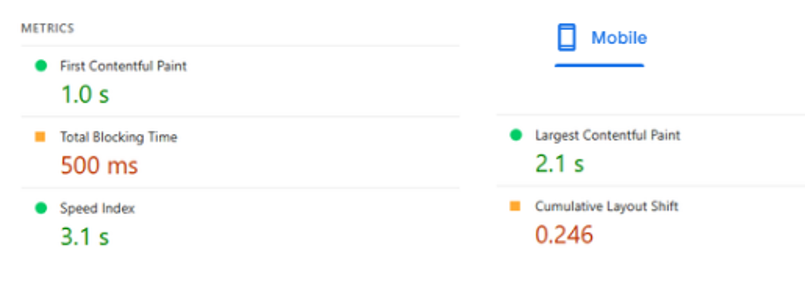
The numbers make the cost of ignoring this explicit. Websites with a Cumulative Layout Shift (CLS) score above 0.25 see an average of 38% more users leaving the page prematurely, and improving Interaction to Next Paint (INP) by 100ms correlates with a 3.8% increase in session duration. For a page where the interaction in question is opening a trading account or starting a loan application, that’s not an abstract UX metric; it is applications lost to layout shift.

Financial sites are particularly exposed here because of what sits on top of the page: consent management platforms, multiple analytics and ad-tracking scripts (often layered for compliance and attribution separately), live pricing widgets and chat tools. Each one is a legitimate business requirement, and each one is a potential CLS or INP liability if implemented without discipline. Audit third-party scripts specifically, not just your own code.
Is Mobile-First Better Than Mobile-Responsive?
Sites that pass Core Web Vitals on mobile see an average 24% lower bounce rate. Mobile is where financial research increasingly starts, with 68% of consumers managing or viewing their accounts on a smartphone. Google has indexed mobile-first for years now, meaning the mobile version of your page is what’s actually evaluated for ranking.
For finance specifically, mobile scrutiny needs to extend to the interactive elements that are hardest to get right on a small screen, such as multi-step onboarding and KYC forms, live pricing tables, comparison tools and calculators. If these degrade, break, or require horizontal scrolling on mobile, you’re not just losing a ranking signal, you’re losing the conversion the entire page exists for.
How Often to Refresh Technical SEO and E-E-A-T?
Google holds financial content to a materially higher trust bar than most other categories, and that bar increasingly determines AI citation as much as ranking. In the financial services sector, AI models overwhelmingly prioritise high-authority educational publishers for broad advice queries, precisely because those sites have built consistent, well-structured libraries of trusted content over time.
This is where technical SEO and content strategy for finance stop being separate conversations. E-E-A-T signals, such as author credentials, clear organisational entity data, citations to regulators and primary sources, and consistent structured data across a content library, are partly a content exercise and partly a markup exercise. A well-written article with no author schema, no organisation markup and no internal linking to supporting content is giving search engines and LLMs very little to verify.
That’s also the argument for auditing before you write anything new. Most finance sites have years of content sitting untouched. Pages built for a product that no longer exists, statistics that expired years ago, regulatory references to a framework that’s since changed. A content audit that maps what exists, what’s ranking, what’s stale and what’s cannibalising what should sit alongside any technical audit, not follow it eighteen months later.
Refreshing and consolidating existing content is consistently one of the highest-return activities available to a finance marketing team, because you’re improving pages that already have some authority rather than starting from zero.
How To Run A Technical SEO Audit For A Finance Website?
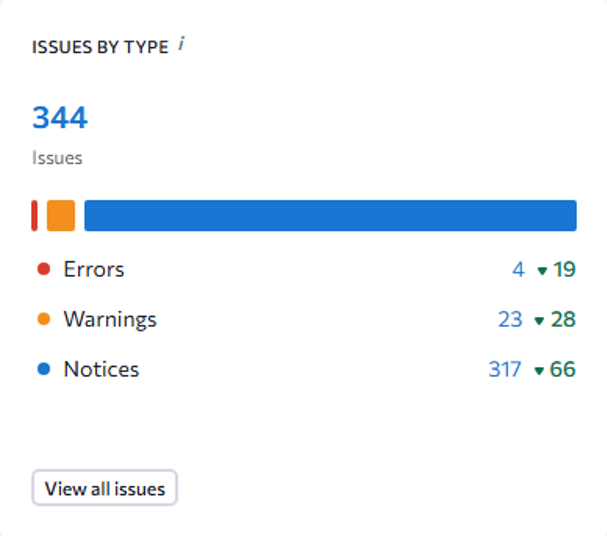
A useful audit doesn’t just list problems, it triages them. We categorise every finding into:
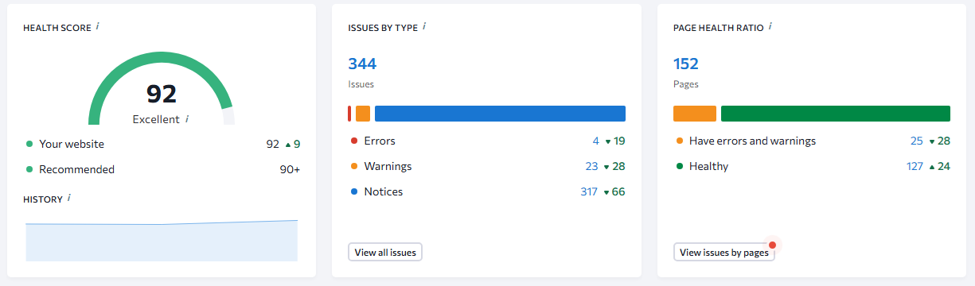
- Errors (critical, directly affecting indexing or Core Web Vitals, like broken pages, duplicate titles)
- Warnings (real issues with no direct ranking penalty but a performance cost, like missing H1s, uncompressed CSS)
- Notices (good-to-have fixes, like missing anchor text, nofollow tags worth reviewing).
This turns a 400-item crawl report into a prioritised action plan, from just a wall of red flags.
Here’s how it works:
Step 1: Crawl the Full Site
Use a crawler that renders JavaScript, not just a basic HTML crawl, otherwise you’ll miss exactly the client-side rendering issues that hit financial sites hardest.
Step 2: Cross-Reference Crawl Data Against Log Files
This is to see what Googlebot is actually spending time on, versus what you intend it to prioritise. This is where crawl budget waste on expired campaigns and thin instrument pages becomes visible.
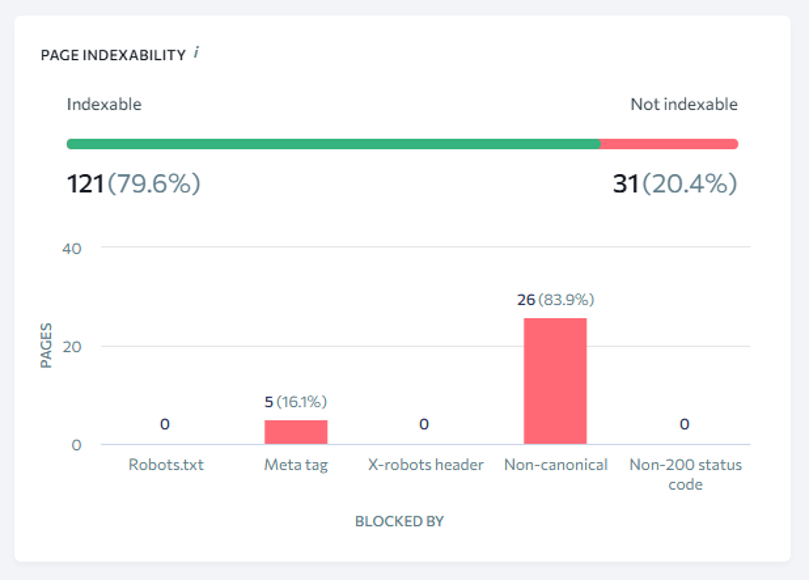
Step 3: Audit Indexation Status
Do this page by page against your sitemap. This will flag orphaned pages, pages blocked by robots.txt unintentionally and pages indexed that shouldn’t be (staging URLs, internal search results, expired offers).
Step 4: Review Canonical and Hreflang Implementation
Check these across every regional and language variant, looking for conflicts between the two.
Step 5: Test Core Web Vitals at the Page-Type Level
Don’t stop at the homepage. Instrument pages, account pages and campaign landing pages typically perform worse than the homepage, and homepage-only testing hides that.
Step 6: Audit Structured Data Coverage
Check Organisation, Financial Product, Article, FAQ and breadcrumb schema for both presence and validation errors.
Step 7: Mobile Rendering and Interaction
Check this on the highest-intent pages specifically: onboarding forms, calculators, live pricing.
Step 8: Map Internal Linking Gaps
Check for gaps between commercial, educational and legal content to identify orphaned or under-linked pages.
Step 9: Prioritise Findings by Business Impact
A broken canonical on a top-converting product page outranks a minor schema warning on a legacy blog post.
Get all this work done by Contentworks Agency. Ask for a comprehensive technical SEO audit.
Technical SEO Checklist for Finance Firms
A quick reference, not exhaustive, but a fair test of where you stand for both traditional search and AI visibility:
- Do your product and instrument pages have unique, non-duplicated canonical URLs?
- Is your Organisation schema complete, consistent and linked to verified external profiles?
- Are expired campaign and offer pages redirected or deindexed, not left live?
- Do your highest-intent pages (onboarding, account opening) pass Core Web Vitals on mobile specifically?
- Is hreflang implemented and consistent with canonical tags across every regional variant?
- Are your educational and commercial content clusters internally linked to each other?
- Is your regulatory and disclosure content included in your internal linking structure, not orphaned?
- Has your highest-traffic content been reviewed or refreshed in the last two quarters?
- Do your key pages have clear author or entity attribution that an LLM could extract confidently?
- Do your monthly or dated archive pages (results, reports, performance updates) have at least one live internal link pointing to them?
- Are any of your own internal links accidentally tagged rel=“nofollow”?
What Does Contentworks Do During a Technical SEO Audit?
We treat a technical SEO audit for a finance brand as a structured diagnostic, not a generic scan. That means crawling the full site with JavaScript rendering, cross-referencing against server log data to see actual crawl behaviour, auditing Core Web Vitals at the page-type level rather than just the homepage, reviewing canonical and hreflang logic across every regional variant, and mapping internal linking gaps between commercial, educational and compliance content. We also assess structured data and entity signals specifically for AI and answer engine visibility, not just traditional SERP features.
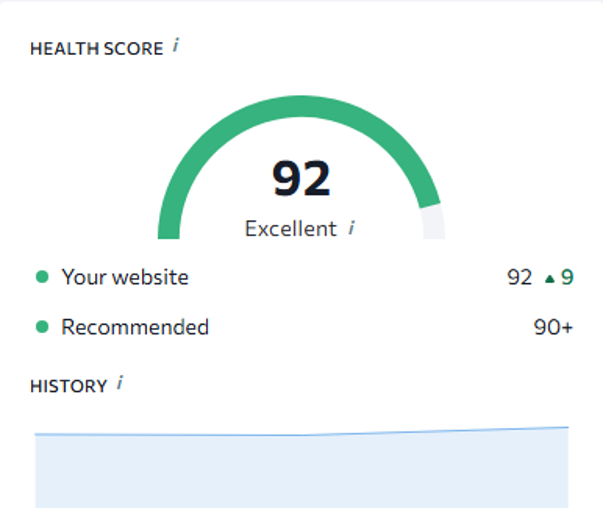
We also score overall site health against a benchmark (a recent finance-sector audit we ran came back with a 92/100 health score, “better than 92% of comparable sites,” useful context for a client trying to work out whether their issues are typical or genuinely alarming) and flag the handful of errors that are actually urgent against the much longer list of low-priority notices, so a marketing team isn’t trying to fix 450 items at once.
We benchmark every audit against what’s actually ranking and being cited in your sector, not a generic best-practice list. That’s because a fix that works a retail bank’s mortgage pages isn’t the same fix that matters for a prop firm’s funded-account pages.
Book a free 15-minute mini-audit with the Contentworks team and find out where your site is losing visibility