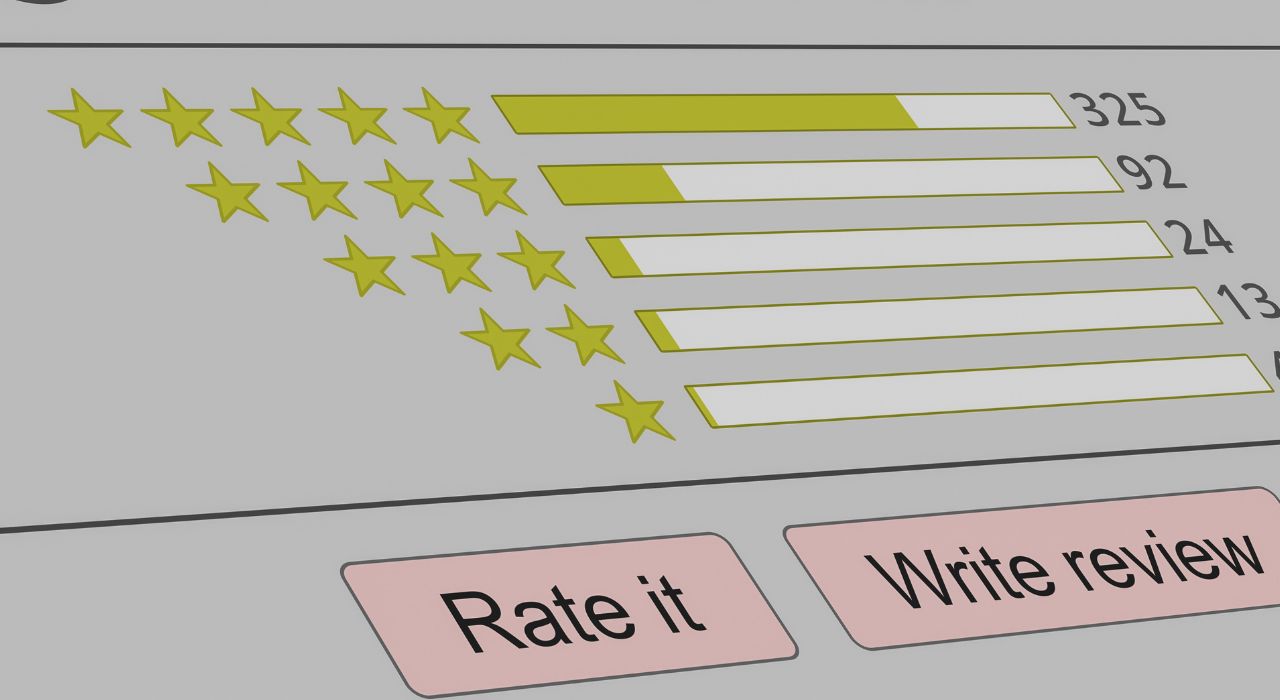
From choosing a pair of shoes to buying a car, to deciding which broker to trade with, online reviews are the go-to source for 93% of consumers. For forex brokers, their potential clients are reading review sites, comparison portals and affiliate blogs before making any decisions. For forex traders, they expect transparency and independent opinions. But that isn’t always what happens.
- 88% of people trust an online review equally to a personal recommendation.
- Consumers will read at least 5 reviews before trusting a brand.
- Businesses with strong reviews see 58% of consumers willing to pay more for products or services.
What this means for brokers is that a strong review profile can influence account openings, increase trust and improve conversion rates. A poor profile can drive prospects elsewhere, regardless of how competitive your spreads, platform or customer service may be.
And here’s the not-so-pretty truth we alluded to at the beginning. While some review sites publish genuine user feedback, others operate primarily as affiliate businesses. Some rankings are based on research and testing, while others are heavily influenced by commercial relationships. So, should your forex broker pay for reviews? And how should brokers approach forex broker review websites in 2026 and beyond?
The Forex Broker Review Problem
Online reviews have become one of the most influential trust signals in financial services. Before opening an account, traders often search for ‘best forex broker’, or ‘is broker X legit’ or ‘is X broker a scam’. As well as validating your credibility, they will look for reviews around withdrawals and how you deal with complaints.
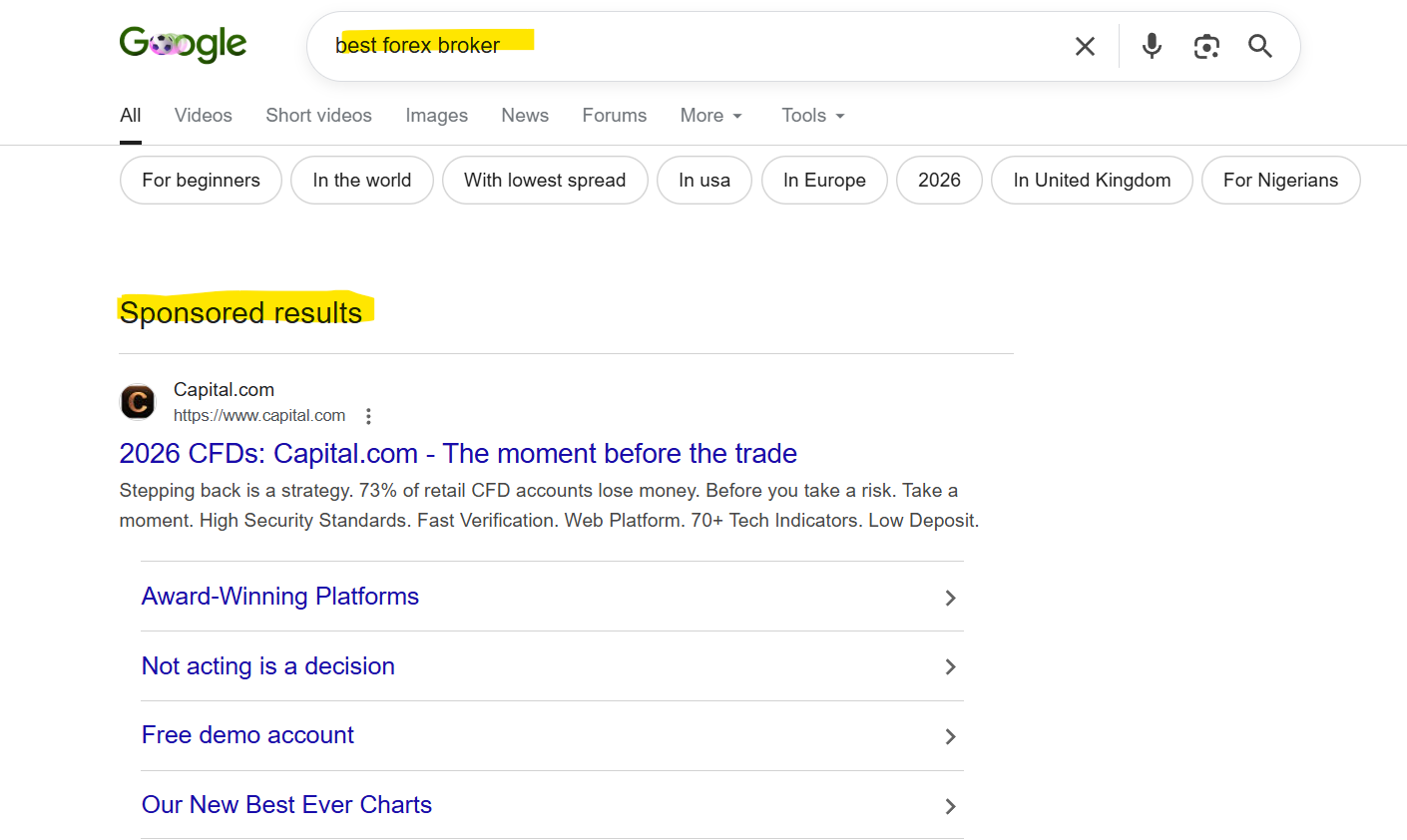
When you search “best forex broker” the top results will be the sponsored ads:
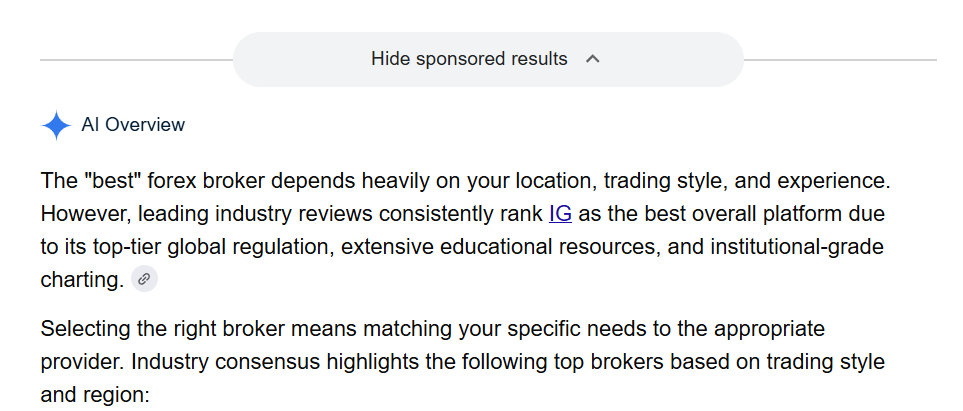
Then you will find the AI overview:
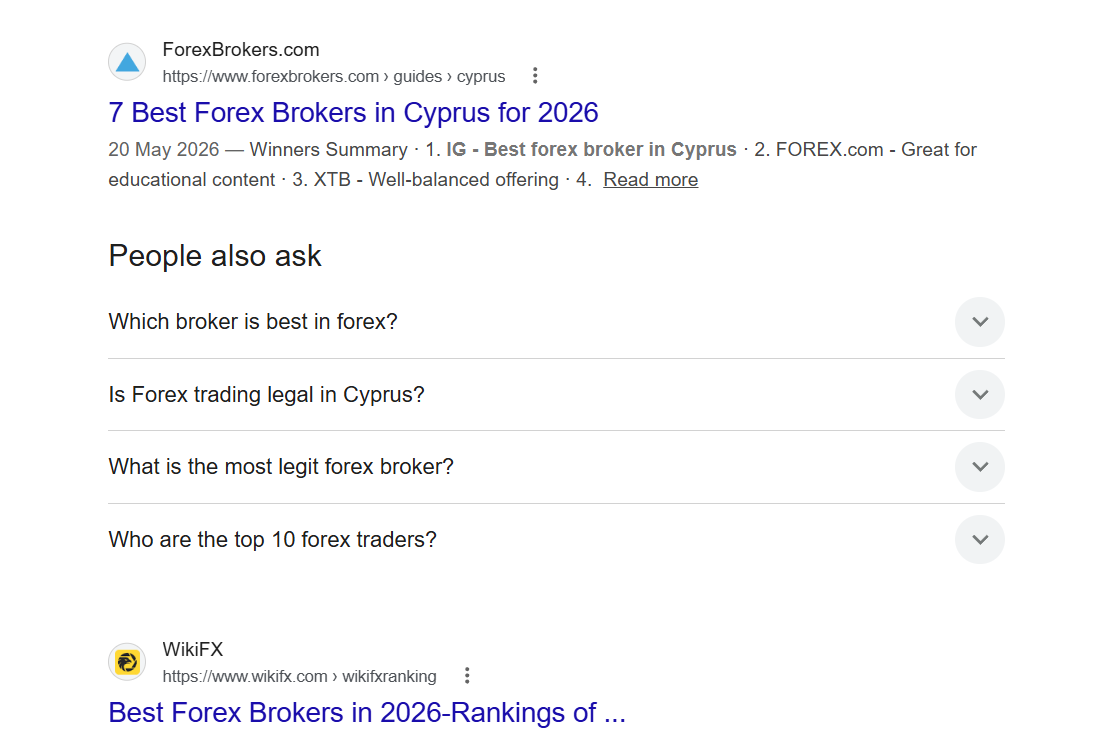
And then the review sites with the highest ranking ones first:
The challenge is that many review sites have conflicting objectives. Most broker review websites earn revenue through affiliate partnerships, sponsored listings or advertising. This doesn’t automatically make their reviews unreliable, but it does create potential bias. At the same time, traders who leave reviews are often motivated by extreme experiences. Happy clients rarely take time to write reviews. Angry clients frequently do.
As a result, many broker review profiles can become disproportionately negative, even for reputable firms. And this is without getting into nefarious practices from competing firms or “blackmail review sites”. This creates a difficult environment where brokers must actively manage their online reputation without crossing ethical or regulatory boundaries.
What Are Forex Broker Review Sites?
Forex broker review sites are websites that compare, rank and evaluate brokers based on various factors. From regulation to platforms and instruments offered, from trading costs to deposit and withdrawal methods. Some review sites focus primarily on editorial content. Others rely heavily on user-generated reviews.
Popular review platforms include:
- Trustpilot
- Forex Peace Army
- WikiFX
- BrokerChooser
- Investing.com broker reviews
- Traders Union
- DailyForex
- FX Empire
- BrokerNotes
- CompareForexBrokers
Many of these sites rank highly for terms such as “best forex broker” and “forex broker reviews,” making them important point of interaction in the trader journey.
The Pros of Review Sites
Review platforms can offer significant benefits for brokers.
- Increased Trust: Prospective traders often trust third-party reviews more than broker marketing material.
- Improved Search Visibility: Review websites frequently dominate Google search results for broker-related keywords.
- Social Proof: Positive reviews provide reassurance during the account-opening process.
- Feedback Collection: Reviews can highlight operational issues before they become larger reputation problems.
- Competitive Benchmarking: Review platforms allow brokers to compare customer sentiment against competitors.
The Cons of Review Sites
Review sites also create significant challenges.
- Review Manipulation: Not all reviews are genuine. Competitors, disgruntled former partners and affiliate marketers may influence ratings. Some sites operate with nefarious intentions charging fees to correct “bad reviews”.
- Affiliate Bias: Some rankings are heavily influenced by commercial arrangements rather than objective analysis.
- Negative Review Bias: Clients are more likely to leave reviews after losses or disputes than after positive experiences.
- Limited Verification: Many platforms struggle to verify whether reviewers are actual clients.
- Reputation Vulnerability: A handful of negative reviews can significantly impact perception, particularly for newer brokers.
Are Forex Broker Reviews Real or Manufactured?
The answer is often both. Many review sites contain genuine feedback from real traders. However, most industry participants acknowledge that review manipulation exists throughout the financial services sector.
Common issues include:
- Fake positive reviews
- Fake negative reviews
- Review farms
- Competitor attacks
- Incentivised reviews
- Affiliate-driven review campaigns
This is one reason why experienced traders rarely rely on a single review source. Instead, they compare information across multiple platforms, regulatory databases, forums and social channels. As a broker, this means that your reputation management must extend beyond a single review site.
Should Brokers Fake Reviews?
In short: no. While fake reviews may provide a temporary boost, the long-term risks are significant. Review platforms are becoming increasingly sophisticated at detecting suspicious activity. Large volumes of reviews appearing within short timeframes, repetitive language patterns and unusual geographic clusters can trigger investigations.
The consequences may include removal of reviews, public profile warning and credibility damage and negative media coverage.
In today’s environment, authenticity matters more than volume. A profile with 500 perfect five-star reviews often appears less credible than a profile with a realistic mix of positive and negative feedback.
Should Brokers Negotiate With Review Sites?
The truth of the matter is that many brokers do, and it’s not necessarily unethical. Review platforms offer profile verification, enhanced listings or premium branding opportunities, advertising and lead-gen programmes.
The key distinction is whether the commercial arrangement influences editorial integrity. Brokers should be cautious of any proposal that guarantees ratings, rankings or review removal in exchange for payment.
Instead, focus discussions on:
- Brand visibility
- Advertising opportunities
- Profile optimisation
- Data accuracy
- Review moderation policies
Should Brokers Pay Review Sites?
Paying for visibility is common but paying for reviews is not. Many leading review platforms offer premium business services that can help brokers improve profile management, showcase company information and collect customer feedback more effectively. You’re paying to benefit from the site’s high ranking which takes time and resources to achieve.
However, paying directly for positive reviews creates substantial reputational risk. Sophisticated traders are increasingly aware of sponsored content and manipulated rankings.
In 2025 Trust Pilot was accused of mafia-style extortion methods even though earlier that year they had removed 5,000 fake review seller sites and deleted millions of fraudulent reviews. Trust Pilot is not the only site that traders are losing trust in. Many forums and trading communities are widely discussing WikiFX review manipulation even though the site itself insists on rigorous transparency.
If You Shouldn’t Pay, Then What?
Rather than attempting to offset negative reviews with paid or incentivised feedback, brokers should focus on organic content marketing and reputation-building strategies that improve their online presence over time. This includes:
- Publishing high-quality educational content
- Creating market insights, guides, and research reports
- Developing a consistent social media presence
- Showcasing customer success stories and case studies
- Implementing proactive reputation management programmes
These initiatives help generate positive brand signals, increase the visibility of authoritative content in search results, and gradually push less favourable reviews lower in search rankings. They also help you to own the narrative as opposed to leaving it to other channels.
Should Brokers Answer Negative Reviews?
Yes you should. Ignoring criticism allows others to control the narrative. Whereas a thoughtful response demonstrates transparency, accountability and customer-centric approach.
As an agency, Contentworks drafts communication strategies that cover what to do when responding to negative reviews. Here are our agency tips on what to do when a negative review surfaces:
- Stay Professional: Avoid defensive language or personal attacks.
- Acknowledge Concerns: Show that the issue has been heard.
- Move Discussions Offline: Encourage direct contact through official support channels.
- Be Aware of Compliance: Your replies are likely to be screenshotted and may be sent to regulators. Always run serious complaint replies past compliance.
- Respond Promptly: Fast responses demonstrate engagement and commitment.
Potential clients often judge a broker by its response to criticism rather than the criticism itself. It is also a great opportunity for you to publicly comment on a question many potential clients might have about you but have not voiced it yet.
How Can You Counteract Negative Reviews Without Paying?
Many brokers assume they need to spend money to improve ratings. But there are many other roads to Rome and here are some we encourage our brokers to take:
- Encourage Satisfied Clients to Leave Reviews
- Incentivise partners to invite genuine client feedback through ethical and compliant review campaigns.
- Many negative reviews stem from delayed support rather than trading conditions. Put some internal policies in place like “48 hour response time for client support” or “24 hour response to complaints”.
- Look for recurring themes and resolve root causes. Before getting angry at a negative review, consider if there are operational fixes you need to make in-house.
- Publish thought leadership, educational materials and market analysis that reinforce trust and expertise. Let’s read more about this in our next section.
Owning the Narrative: 6 Steps to a Better Reputation
The strongest brokers do not depend on review sites alone. They build multiple sources for reputation reinforcement. Owning your narrative and having a strong ranking are key. Here are 6 steps you can take today to get you started.
Step 1: Audit Your Existing Reputation
Review:
- Trustpilot
- Forex Peace Army
- Google Business Profile
- Social media mentions
- Forum discussions
- News coverage
- Generative AI tools like ChatGPT, Claude, Perplexity and Gemini
Identify strengths, weaknesses and recurring themes.
Ask Contentworks to do a full reputation and GEO audit for your brand.
Step 2: Create Consistent Thought Leadership
Publish:
- Market commentary
- Educational content
- Executive interviews
- Research reports
- Trading insights
- Industry news
- Genuine trader and IB reviews
A broker with strong authority content is less vulnerable to isolated negative reviews.
Step 3: Optimise Branded Search Results
Ensure that when traders search your brand name they find:
- Official website
- Social channels
- Educational content
- News mentions
- Independent coverage
Not just review sites.
Step 4: Monitor Reviews Continuously
Reputation management is not a one time exercise. This is an ongoing activity so you can respond before issues escalate. Ensure you track:
- New reviews
- Brand mentions
- Social sentiment
- Search results
- Competitor sentiment
If you need help to build, and maintain your broker reputation, speak to us for customised solutions.
Step 5: Build Media Presence
Positive media coverage helps balance review-site narratives. Contributed articles, interviews and expert commentary strengthen credibility across search engines and trader research journeys. Also, an active voice on social media channels helps fill your brand space with your narrative.
Are AI Search Engines Using Forex Broker Review Sites?
It’s 2026 and the answer is a resounding yes. Large Language Models (LLMs) such as ChatGPT, Gemini, Claude and Perplexity are designed to summarise information from across the web. When users ask questions like “Is Broker X trustworthy” AI systems will draw on publicly available information including review websites, industry publications, news coverage, forums, regulatory records and a broker’s own content.
This creates a new challenge for brokers. Historically, a negative review on a review platform might only influence traders who visited that specific website. Today, recurring complaints appearing across multiple sources can become part of the broader online narrative that AI systems may identify and summarise.
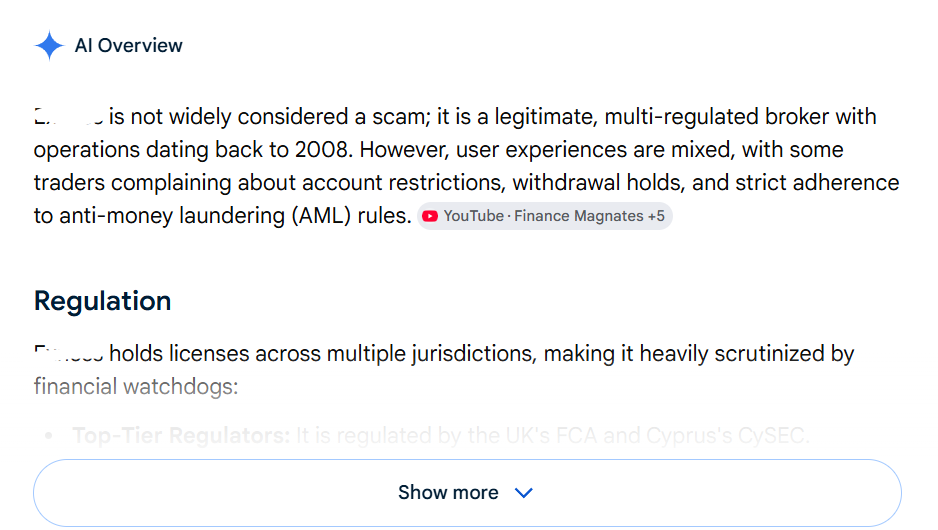
For example, if dozens of sources repeatedly mention withdrawal delays, poor customer support or regulatory disputes, these themes may become associated with a broker’s brand even when the majority of clients have had positive experiences.
The good news is that AI systems do not typically rely on a single review platform. They look for patterns across multiple sources. It means that brokers can reduce the impact of negative reviews by strengthening their overall digital footprint.
How to Mitigate Negative Signals in AI Search
The activities you undertake to improve your trust signals in AI search, are thankfully, similar to what you would do in general.
- Publish more high quality content
- Build strong media coverage
- Encourage genuine customer reviews
- Address common complaints publicly
- Monitor your reputation across channels
Essentially what you are trying to do is strengthen your branded search results. When users search your broker’s name, they should find a mix of content including your website, educational resources, social channels, news coverage and independent reviews. A diverse search footprint gives both traders and AI systems a more complete picture of your business.
The future of reputation management is no longer about one review site or one search engine. Brokers should actively monitor review platforms, forums, social media discussions, news mentions and AI-generated search results to understand how their brand is being represented.
The Unavoidable Truth of Broker Review Sites
Brokers that consistently appear in searches for ‘best forex broker’ are rarely the ones with the most reviews. They are the ones that have successfully earned trust across multiple channels or invested heavily.
Rather than focusing on shortcuts, brokers should prioritise authentic reputation building.
- Don’t buy reviews.
- Don’t manufacture testimonials.
- Don’t chase perfect ratings.
Instead, focus on delivering excellent client experiences, encouraging genuine feedback and building a strong online presence that extends beyond any single review platform.
At Contentworks Agency, we specialise in reputation management, content marketing, PR and brand positioning for forex brokers, fintechs and financial services firms. From review monitoring and response strategies to thought leadership campaigns, media placements and SEO-driven content, we help brokers take control of their narrative and build long-term trust with traders worldwide.
Speak to the Contentworks team about creating a reputation strategy that works for your brand.