
The Digital Operational Resilience Act, known as DORA, is no longer just a compliance concern for IT and risk teams. Since coming into force on 17 January 2025, it has become a critical framework shaping how financial services brands communicate, operate, and build trust in a digital-first environment. Here’s what financial marketers should know about DORA.
What Is DORA?
DORA is an EU regulation designed to ensure financial institutions can withstand, respond to, and recover from digital disruptions, including cyberattacks and system failures. It creates a unified EU-wide framework for managing ICT risk across banks, brokers, fintechs, insurers, and crypto service providers. At its core, DORA replaces fragmented national rules with a consistent standard for digital resilience.

Real-World Example That Would Likely Violate DORA
As DORA is relatively new, we cannot access violations yet. However, we can look back at an event that likely would have triggered a DORA violation. When TSB migrated its core banking system in 2018, the result was a major outage:
- Customers were locked out of accounts for days
- Some users could see other customers’ data
- Payments failed and balances were incorrect
- Communication was slow, inconsistent, and unclear
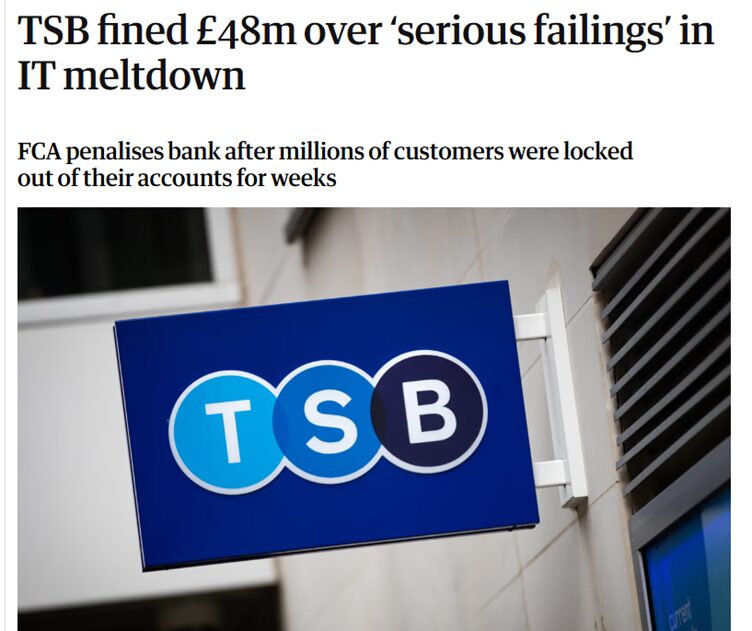
This led to regulatory fines of £48.65 million from the Financial Conduct Authority. Under DORA, this incident would likely trigger multiple violations:
ICT Risk Management Failure
The migration was not properly controlled or tested. Under DORA, firms must prove resilience before major system changes.
Operational Resilience Testing Failure
The platform clearly failed under real-world conditions. DORA requires scenario testing to prevent exactly this kind of breakdown.
Incident Reporting and Communication Issues
Customers received confusing and delayed updates. DORA requires structured, timely, and transparent communication.
Data Security Breach
Customers seeing other accounts would trigger serious regulatory escalation under DORA.
What Does DORA Do?
DORA creates a single rulebook for digital resilience across the EU financial sector. In practice, it standardises how firms anticipate, handle, and communicate digital risk across their entire organisation. It is built around five core pillars, each with direct implications for marketing, communications, and brand governance. Let’s look at those pillars below:
#1 ICT Risk Management
DORA requires firms to implement a comprehensive ICT risk management framework that is integrated into overall business strategy.
- Continuous identification of risks across systems and processes
- Protection measures such as cybersecurity controls and access management
- Detection systems including monitoring and alerts
- Response and recovery planning through business continuity frameworks
Senior management is now directly accountable for ICT risk so responsibility no longer sits with technical teams alone.
Marketing implication
If your campaigns rely on digital infrastructure such as websites, apps, or landing pages, those systems must be resilient. Launching a campaign during an outage is no longer just a timing issue, it becomes a governance problem.
#2 Incident Reporting
DORA introduces strict requirements for classifying and reporting ICT-related incidents.
Firms must:
- Categorise incidents based on severity and impact
- Report major incidents to regulators within defined timeframes
- Provide updates as situations evolve
- Conduct post-incident analysis
This creates a formal and auditable communication structure during disruptions.
Marketing implication
Marketing teams are directly involved in:
- Customer notifications
- Website messaging and banners
- Social media updates during outages
All messaging must be accurate, timely, and aligned with regulatory disclosures. Improvised messaging or overly polished brand language can create compliance risk.
#3 Operational Resilience Testing
DORA mandates regular and rigorous testing of digital resilience. This includes:
- Vulnerability assessments
- Scenario-based testing such as cyberattacks or outages
- Threat-led penetration testing for larger firms
The goal is to simulate real-world disruption and ensure systems and teams can respond effectively.
Marketing implication
Claims such as reliable platform or seamless experience must be backed by tested performance. Campaign planning must also consider testing cycles and operational readiness. Launching new products without proven resilience can expose both the brand and the business.
#4 Third-Party Risk Management
DORA places strong emphasis on third-party ICT risk so firms must:
- Identify all ICT vendors and service providers
- Assess and monitor their risk exposure
- Put contractual safeguards in place
- Maintain exit strategies for critical providers
Regulators may also oversee critical third-party providers directly.
Marketing implication
Marketing agencies managing your CRM systems, email platforms, analytics tools, and ad tech must:
- Work with compliance and procurement on vendor selection
- Understand how and where customer data is processed
- Avoid using unapproved tools or platforms
#5 Information Sharing
DORA encourages firms to participate in information sharing related to cyber threats.
This includes:
- Sharing threat intelligence with industry peers
- Participating in sector-wide resilience initiatives
- Learning from incidents across the financial ecosystem
Marketing implication
This shift supports more transparent and structured communication strategies. Brands are expected to educate customers about digital risks while also demonstrating that they have strong, proactive security practices in place. Over time, this builds credibility and long-term trust, especially in a sector where confidence is critical. For agencies like Contentworks Agency, this is a core area of expertise.
We work closely with regulated financial brands to translate complex regulatory and security concepts into clear, compliant, and engaging content. This includes:
- Developing educational content that explains platform security, risk controls, and resilience measures in a way that is accurate but accessible.
- Creating thought leadership articles, blogs, and whitepapers that position brands as transparent and proactive rather than reactive.
- Aligning all messaging with compliance requirements to ensure that security claims are substantiated and not misleading.
- Supporting crisis communication strategies with pre-approved messaging frameworks that can be deployed quickly during incidents.
- Auditing existing content to remove outdated, exaggerated, or non-compliant claims around security and reliability.
Contentworks acts as a bridge between marketing and compliance teams. This ensures that messaging reflects real operational practices while still maintaining brand tone and engagement. Speak to our team about compliant content marketing.
Why DORA Matters for Financial Services Brands
DORA is not just about infrastructure. It is about trust, reputation, and customer experience. Financial services brands rely heavily on digital platforms and when those systems fail, customers can lose access to funds, platforms, or critical information. The result is immediate reputational damage. DORA addresses this by enforcing resilience across the entire ecosystem, including third-party providers.
DORA Rules for Marketers
For agencies working in financial services, DORA introduces clear expectations.
- Audit your Martech stack. Every platform you use must be assessed for compliance
- Align messaging with reality and avoid exaggerated claims such as guaranteed uptime. All messaging must reflect actual operational capability.
- Prepare crisis-ready content including pre-approved incident communication templates, cross-channel messaging plans and clear escalation and approval processes.
- Strengthen data governance and ensure secure handling of customer data, clear understanding of data flows and alignment with both DORA and GDPR.
- Collaborate across teams with marketing closely aligned with IT, compliance and risk. Siloed marketing is no longer viable under DORA.
- Monitor regulatory updates and stay informed on regulatory changes, update messaging when required and maintain records of campaigns and approvals.
Dora Presents An Opportunity For Financial Marketers
DORA should not be treated as a checkbox exercise but instead a chance to differentiate through trust and transparency, strengthen customer relationships and demonstrate reliability during disruption.
It signals a shift in financial marketing from performance-driven messaging to trust-based communication. If your brand communicates reliability, your operations and your partners must support it. Under DORA, resilience is not just operational, it’s reputational. Speak to our team about compliant financial services marketing.