North America is one of the most influential financial regions in the world. Yet for forex brokers, it is also one of the most complex markets to enter. Strict regulatory oversight, limited licensing opportunities and highly sophisticated traders make the region fundamentally different from emerging forex markets. While retail forex participation is smaller than in regions such as Asia or Latin America, North America remains strategically important due to its high-value traders, advanced fintech ecosystem and deep institutional markets. In this report, we explore the opportunities, regulatory landscape and marketing strategies that work for brokers targeting the United States and Canada.
If you’re exploring global expansion opportunities, you may also want to read Forex Trading in Asia – A Report for Brokers and Africa forex trading report which explore rapidly expanding trading communities.
How Big Is the Forex Market in the United States?
Globally, forex remains the largest financial market in the world. According to the Bank for International Settlements, global foreign exchange trading reached $9.6 trillion in average daily turnover in April 2025, representing a 28% increase since 2022.
Despite the growth of new trading hubs, activity remains highly concentrated in a handful of financial centres. Sales desks in the United Kingdom, the United States, Singapore and Hong Kong account for around 75% of global FX trading activity, highlighting the continuing importance of North American markets in global liquidity.
For brokers, the region therefore presents a paradox: it is one of the most important financial ecosystems in the world, but also one of the hardest retail trading markets to enter.
Key Takeaways: Forex Trading in The US
- The United States represents roughly 18–19% of global FX turnover, making New York one of the world’s largest trading hubs.
- The US retail forex market is highly regulated and concentrated among a small number of brokers including FOREX.com, OANDA, IG and Interactive Brokers.
- Content marketing, SEO and financial PR outperform traditional paid acquisition channels in the North American forex market.
- Prop trading firms and funded trading models are reshaping trader acquisition funnels.
Market Overview and Demographics
The United States plays a central role in the global forex market. New York is the world’s second-largest trading hub after London, with around $2.33 trillion in daily foreign exchange turnover, representing roughly 18.6% of global FX trading volume. However, much of that activity comes from institutional trading desks rather than retail investors. Retail forex trading in the United States remains comparatively small due to strict regulatory requirements. However, the North American retail forex market offers high value to brokers. Most US traders already participate in multiple asset classes including equities, options and cryptocurrency markets. Forex trading is therefore often part of a broader trading strategy rather than a standalone activity.
Canada shows similar characteristics. While the population is much smaller than the United States, the country remains a major financial centre with strong participation in global currency markets. The close economic relationship between Canada and the US also means the USD/CAD pair consistently ranks among the most traded currency pairs in North American markets. Traders across the region are typically well educated, technologically literate and comfortable using advanced trading platforms. Many are part-time traders with professional careers, trading primarily during the London and New York market overlap.
Opportunities, Regulation and Market Dynamics
The defining feature of the North American forex market is regulation.
In the United States, brokers must register with both the Commodity Futures Trading Commission (CFTC) and the National Futures Association (NFA) before offering retail forex trading services. The regulatory framework imposes strict requirements including capital thresholds, detailed reporting obligations and strict advertising rules. Retail leverage is capped at 50:1 for major currency pairs, while hedging positions on the same currency pair is prohibited and traders must follow FIFO (First-In-First-Out) position closing rules.
These restrictions have dramatically reduced the number of brokers able to operate in the country. Today the market is dominated by just a handful of firms including:
- OANDA
- FOREX.com (part of StoneX Group)
- IG US
- Interactive Brokers
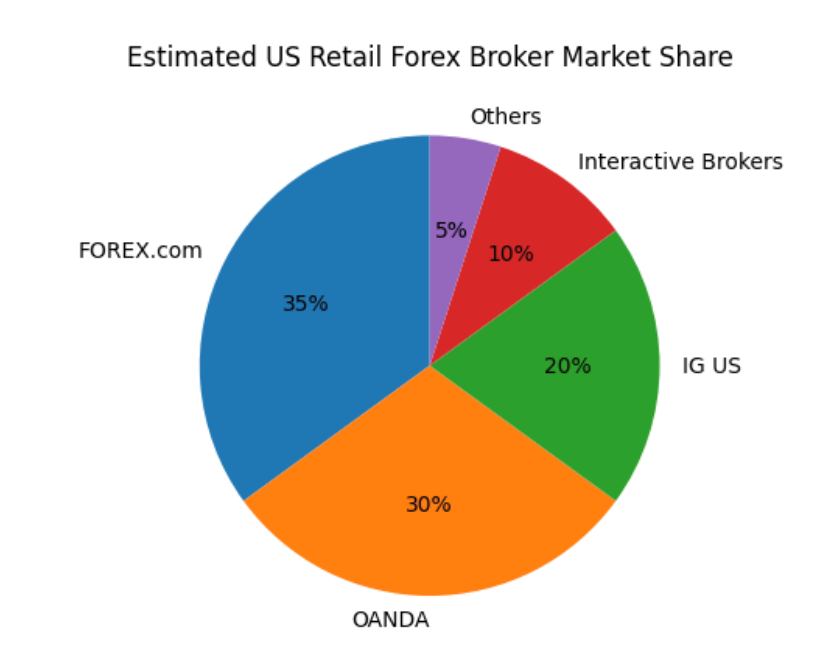
The top two US brokers account for the majority of retail trading volume, reflecting the strict regulatory environment and high capital requirements.
Regulatory enforcement in the United States is also extremely active. The CFTC regularly brings enforcement actions against fraudulent trading schemes and unregistered brokers targeting US investors. These actions often involve millions of dollars in restitution and penalties. For brokers considering entry into the market, regulatory compliance is therefore not simply a legal requirement but a core element of brand credibility.
Canada’s Regulatory Landscape
Canada operates under a similar regulatory philosophy focused on investor protection and market transparency.
Retail trading firms are supervised by the Canadian Investment Regulatory Organization (CIRO), which replaced the former IIROC regulatory framework in 2023. Canadian traders also benefit from investor protection through the Canadian Investor Protection Fund (CIPF), which generally covers up to CAD $1 million per account category if a broker becomes insolvent.
Several international brokers operate within Canada’s regulated framework, including OANDA, FOREX.com, CMC Markets and Interactive Brokers. Local brokerages such as Questrade also offer access to currency trading through multi-asset platforms. Unlike the US market, Canadian traders frequently access forex trading alongside equities, ETFs and derivatives. This multi-asset environment influences both broker product design and marketing strategies.
Cultural and Market Challenges
Forex brokers entering North America face several structural challenges beyond regulation.
#1 Competition
The first is competition from mature financial markets. Retail investors in the US and Canada already have access to commission-free stock trading, advanced derivatives platforms and increasingly sophisticated crypto exchanges. Forex trading competes with multiple asset classes for trader attention.
#2 Trader Scepticism
The second challenge is high trader scepticism. North American investors are generally cautious about online trading platforms due to a long history of financial scams and misleading investment promotions. Regulators frequently issue warnings about fraudulent forex investment schemes, reinforcing the importance of transparency and credibility in broker communications.
#3 Regional Nuances
The third challenge is that traditional forex marketing strategies rarely work in the region. Heavy bonus campaigns, signal services and influencer promotions often appear unprofessional to experienced traders. This forces brokers to rethink their marketing approach entirely.
Forex Marketing in North America
For forex brands targeting North American traders, credibility is everything. Rather than relying on aggressive advertising or social media influencers, the most successful brokers invest heavily in content marketing, educational resources and thought leadership. This shift toward authority-driven marketing reflects the behaviour of the region’s traders, who often conduct extensive research before opening trading accounts. Here are three strategies that work in the North American market that you can get started on today.
#1 Education-led marketing
Education remains one of the most powerful acquisition strategies in North America. Brokers that produce high-quality research reports, trading tutorials and market commentary position themselves as trusted information sources rather than simply trading platforms.
OANDA provides a good example of this strategy. The broker has built a reputation around transparent pricing, educational resources and research tools designed for professional traders. This content-driven approach helps attract experienced traders while aligning with regulatory expectations around responsible trading promotion.
Contentworks Agency partnered with OANDA, a leading global forex broker, to support their content strategy. Check out these authoritative, search-driven financial insights.
#2 SEO and search-driven acquisition
Organic search traffic plays a particularly important role in North American broker marketing.
Many traders discover platforms through queries such as:
- “is forex trading legal in the US”
- “best regulated forex brokers USA”
- “forex leverage rules United States”
This creates an opportunity for brokers to dominate search results through long-form educational content and regulatory guides. In contrast to regions where affiliate networks dominate search results, North American traders frequently rely on established financial publishers and broker knowledge hubs.
For marketing teams, this makes SEO and GEO strategies far more effective than paid advertising.
Read how to Improve Your Forex SEO With These Proven Hacks.
#3 Financial PR and thought leadership
Public relations campaigns also play a major role in broker visibility.
Rather than focusing on promotional messaging, successful brokers position themselves as financial technology experts and market commentators.
Examples include:
- Economic outlook reports
- Data-driven trading research
- Thought-leadership on macroeconomic trends
- Platform/product innovation announcements.
FOREX.com has successfully used this strategy by publishing professional-grade market research and economic analysis, helping the brand build credibility with professional traders.
Read more on Online Reputation for Finance – The 2025 Edition
The Rise of Prop Trading & Funded Accounts
Another major trend shaping the North American trading ecosystem is the rapid growth of proprietary trading firms and funded trader programmes. These companies allow traders to complete evaluation challenges in order to access funded trading accounts, often without depositing significant personal capital.
The model has expanded rapidly over the past five years, driven largely by social media trading communities and the increasing popularity of algorithmic and short-term trading strategies. Instead of depositing funds with a broker, traders pay an evaluation fee to demonstrate profitability under predefined risk parameters. If successful, they gain access to larger trading capital and typically receive a share of the profits generated.
While the exact size of the prop trading industry is difficult to measure, estimates suggest the sector has grown into a multi-billion-dollar global market, with some leading firms reporting hundreds of thousands of active traders worldwide. Platforms such as FTMO, one of the most recognised prop trading brands, report that traders from more than 180 countries participate in funded trading programmes, highlighting the international reach of the model.
North America has become one of the most active regions for prop trading participation. The appeal is particularly strong among retail traders who want to access larger trading capital without the regulatory complexity or financial commitment of opening large brokerage accounts.
For many traders, funded trading programmes act as an entry point into the professional trading ecosystem. Participants often use evaluation accounts to test strategies, develop trading discipline and build track records before transitioning to personal brokerage accounts.
Predictive Markets: The New Frontier
At the same time, the growth of prop trading has begun to overlap with another emerging sector: prediction markets.
Prediction markets allow participants to trade contracts based on the probability of real-world events. These markets have existed for decades in academic and financial environments, but they have gained renewed attention in recent years as financial technology platforms explore ways to apply market-based forecasting models to political, economic and social events. In the United States, prediction markets operate within a complex regulatory framework overseen by the Commodity Futures Trading Commission, which regulates event contracts and derivatives markets. Platforms such as Kalshi have introduced regulated event trading markets allowing participants to speculate on outcomes ranging from economic indicators to policy decisions.
The rise of prediction markets reflects a broader shift toward data-driven speculation and financial forecasting, where traders apply similar analytical techniques across multiple asset classes including forex, commodities, crypto and event contracts.
Strategic Opportunities or Ducks Waiting to Sink?
For brokers and fintech brands, these developments create several strategic opportunities. First, prop trading programmes are helping to expand the overall pool of active traders. Individuals who might otherwise hesitate to deposit significant capital into trading accounts are willing to experiment with evaluation challenges. Many of these traders eventually graduate to traditional brokerage accounts once they gain experience and confidence.
Second, the growth of funded trading communities has created vibrant ecosystems around trading education, strategy development and algorithmic trading. These communities generate enormous volumes of trading content across YouTube, Discord and specialised trading forums. Brokers that engage with these communities through educational resources and partnerships can significantly expand their brand visibility.
Third, the intersection between prediction markets and traditional trading platforms opens the door for new types of financial products. As fintech platforms explore event-based trading contracts, brokers may increasingly incorporate predictive analytics, sentiment indicators and macroeconomic forecasting tools into their platforms.
However, the sector also presents several challenges
One concern is the sustainability of some prop trading business models. Critics argue that certain firms rely heavily on evaluation fees rather than profitable trading activity. This has raised questions about transparency, payout structures and trader expectations within the industry.
Regulators are also paying closer attention to the sector. In the United States, the CFTC has increasingly scrutinised firms offering trading challenges or simulated trading environments that resemble derivatives trading. As regulatory frameworks evolve, both prop trading firms and their brokerage partners may face additional compliance requirements.
Another challenge lies in trader psychology. Evaluation challenges often involve strict risk limits and time-based profit targets, which can encourage short-term trading behaviour rather than disciplined long-term strategy development. For brokers seeking to build sustainable client relationships, this can create a mismatch between trading expectations and real market conditions.
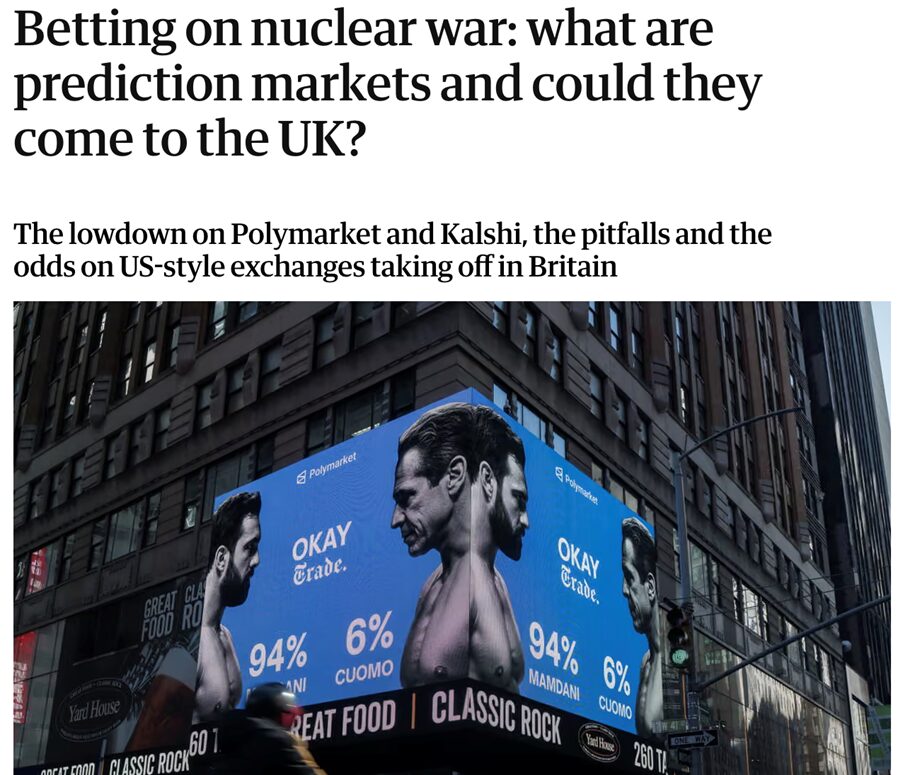
Even with companies like Polymarket and Kalshi hitting tens of billions in valuations, prediction markets have been raising a number of ethical concerns:
Despite these challenges, the continued growth of prop trading and predictive markets signals an important shift in how modern traders interact with financial markets. The next generation of traders is increasingly comfortable moving between multiple platforms, asset classes and trading models. For brokers operating in North America, understanding these ecosystems is becoming essential. Rather than competing directly with prop firms, many brokers are exploring collaborative opportunities through platform integrations, educational partnerships and liquidity relationships.
As trading technology continues to evolve, the boundaries between brokerage platforms, prop trading firms and predictive markets may become increasingly blurred. The firms that adapt most successfully will be those that recognise these emerging ecosystems and position themselves at the centre of the modern trading landscape.
Payment Methods and Platform Preferences
North American traders typically fund trading accounts using traditional banking infrastructure. Common payment methods include bank wire transfers, ACH bank transfers in the United States, debit and credit cards, brokerage account transfers and Interac e-Transfer in Canada.
Crypto deposits are far less common among regulated brokers due to strict anti-money laundering rules and compliance requirements.
Platform performance also matters more than promotional incentives. Traders prioritise:
- Fast execution speeds
- Advanced charting tools
- Algorithmic trading support
- Access to market research
These preferences further reinforce the importance of positioning a brokerage as a technology platform rather than a speculative trading product.
Looking To Expand To The USA?
For brokers willing to invest in long-term credibility, North America remains one of the most influential markets in global forex trading. But success in the United States and Canada requires a shift away from aggressive acquisition tactics toward education, trust-building and thought leadership. Traders in this region respond to expertise, transparency and strong regulatory compliance. At Contentworks Agency, we specialise in forex, fintech and financial services marketing. From regional market research to SEO-driven content strategies, our team helps brokers connect with traders around the world. Book a Zoom call with our team to get started.