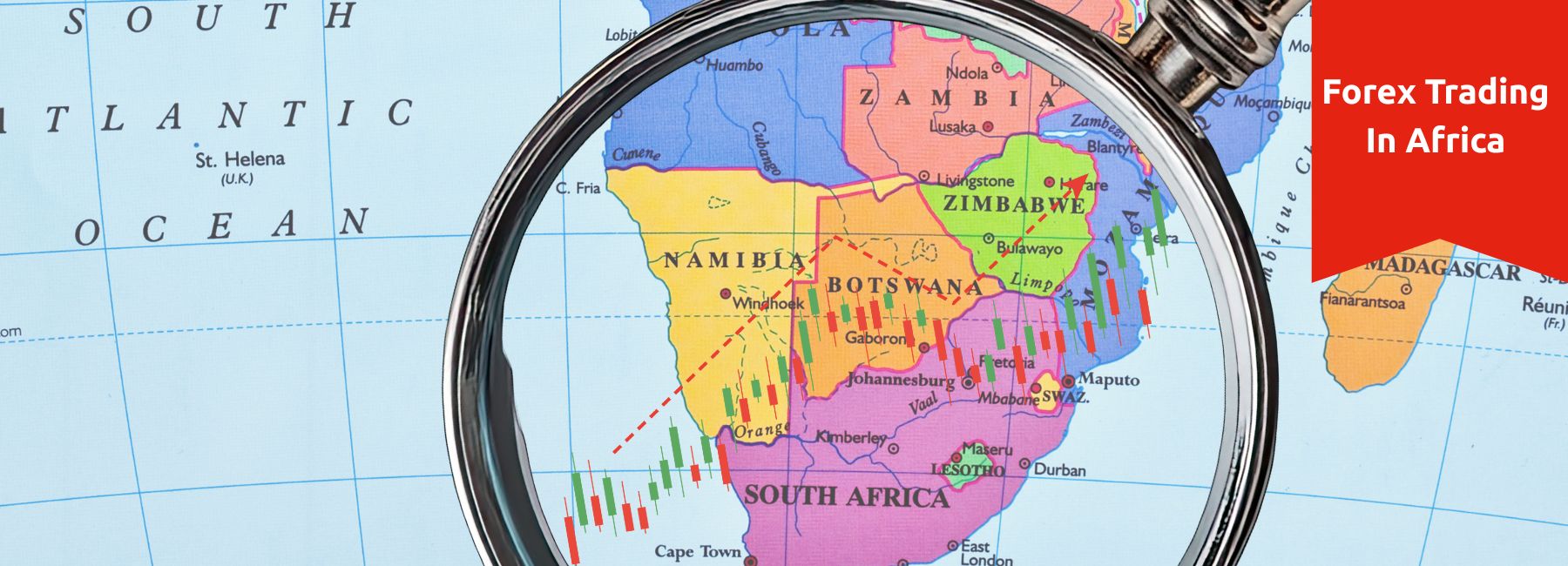
Africa’s forex trading landscape has entered a new phase of maturity. What was once viewed by many brokers as an emerging or speculative opportunity is now evolving into a strategically important region shaped by mobile financial innovation, demographic momentum and increasingly formalised regulation. This report provides an in-depth analysis of forex trading in Africa for brokers and financial services marketers seeking sustainable growth across the continent.
From market fundamentals to cultural nuances and proven marketing strategies, this article provides the in-depth perspective brokers need to confidently invest, expand and thrive in Africa’s forex ecosystem. It is also updates and expands upon our earlier industry analysis, “Forex Trading in Africa: A 2025 Outlook”, incorporating new market data, regulatory developments and marketing insights from the past 12 months.
Market Overview & Demographics
Africa’s forex markets are shaped less by traditional banking infrastructure and more by digital leapfrogging. The continent has become the global epicentre of mobile money, fundamentally altering how individuals access financial services, including trading. By the end of 2024, Africa had surpassed 1.1 billion registered mobile money wallets, processing over $1 trillion in transaction value annually, accounting for more than half of global mobile money volume.
This shift has direct implications for Africa forex brokers. Traders are increasingly bypassing traditional banks entirely, funding and withdrawing trading accounts via mobile wallets such as M-Pesa, MTN MoMo and Airtel Money. In Kenya alone, mobile money penetration exceeds 90% of adults, while Ghana and Tanzania are approaching similar levels.
Demographically, Africa is uniquely positioned for long-term retail trading growth. The continent has the youngest population globally, with a median age below 20 in many countries. This generation is mobile-native, socially connected and increasingly exposed to global financial narratives via YouTube, TikTok and Telegram. As access barriers fall, forex trading is often perceived as both an income opportunity and a gateway to financial participation.
Language diversity remains a defining factor. English dominates in Southern and East Africa, French across much of West Africa, Arabic in North Africa, and Swahili across Kenya and Tanzania. Brokers that fail to localise language, not just translate, consistently underperform in engagement and trust metrics.
From a regulatory standpoint, Africa remains fragmented. There is no continent-wide framework for retail forex, but several national regulators are actively shaping policy, enforcement and consumer protection. South Africa’s FSCA remains the most established authority, while countries such as Kenya and Ghana are steadily moving toward clearer oversight structures. Elsewhere, including Egypt and Morocco, retail forex exists largely through offshore regulation, placing increased importance on broker transparency and compliance messaging.
Regional Market Summary
Across all markets, there’s rising interest, however uneven, in promoting forex trading with regulators increasingly focusing on investor protection, AML/KYC standards, and advertising restrictions. Brokers that align with compliance not only reduce risk but also benefit from elevated credibility in regions where fraud narratives have historically damaged trust.
Opportunities, Regulation & Market Dynamics
Africa’s diverse economies present an array of unique opportunities and market dynamics for forex brokers, each shaped by local context. Here is a country-by-country breakdown of the opportunities and challenges of marketing forex trading in Africa.
South Africa: Africa’s Regulatory Benchmark
South Africa is widely regarded as the most mature forex market on the continent. Its well-developed financial sector, deep liquidity and robust oversight have made it both a regional hub and a benchmark for best practice. The Financial Sector Conduct Authority (FSCA) regulates over-the-counter derivative providers, including forex brokers, enforcing licensing, reporting and conduct standards that closely resemble those in developed markets.
South African traders tend to be more experienced and risk-aware than many of their continental counterparts. This has driven strong demand for advanced platforms, transparent pricing, educational depth and regulated environments. According to regional industry analysis, South Africa remains the largest African contributor to retail forex volumes, with sustained broker growth driven by both domestic and cross-border clients.
Quick Market Insights
- South Africans reward credibility over hype
- Overly aggressive bonus-driven acquisition tactics struggle on ROI
- Positioning your brokerage as a long-term trading partner, emphasising regulation and education sees better performance.
Nigeria: Scale, Complexity and Trust Building
Nigeria represents Africa’s largest untapped forex opportunity by population, but also one of its most complex operating environments. The country’s FX market has historically been volatile, shaped by currency controls, parallel markets and regulatory uncertainty. In recent years, however, Nigerian authorities have moved to stabilise and formalise foreign exchange activities. The Central Bank of Nigeria has licensed 82 exchange bureaus under new FX rules, signalling a stronger commitment to oversight and transparency.
Retail forex trading is not prohibited, but local licensing frameworks remain under development. As a result, most Nigerian traders use internationally regulated brokers, often favouring those licensed by the FCA, CySEC or FSCA. Trust is the dominant acquisition challenge.
Economically, Nigeria’s outlook is improving. The central bank forecasts 4.49% growth in 2026 with easing inflation, which could further expand retail participation in financial markets.
Quick Market Insights
- Success in Nigeria depends on transparency, past exposure to scams make Nigerian traders highly sceptical of promises of fast profits, particularly on social media
- Community based engagement rather than aggressive performance marketing are favoured
- Education is a trust signal that shows the broker is invested in the trader’s success.
Kenya: Mobile-First Forex Adoption
Kenya is arguably Africa’s most digitally integrated financial market. The widespread adoption of M-Pesa has normalised mobile transactions across all income levels, creating ideal conditions for mobile-first trading platforms. Over 90% of Kenyan adults use mobile money, making seamless wallet integration essential for brokers.
The Capital Markets Authority (CMA) regulates forex trading through licensed local brokers, though many Kenyan traders also access offshore platforms. Kenya’s trader demographic is young, highly engaged on social media and receptive to educational content. Swahili localisation, combined with English, significantly improves engagement rates.
Quick Market Insights
- Marketing in Kenya is deeply community-driven. Traders often discover brokers through YouTube educators, Telegram groups and peer recommendations rather than traditional advertising
- Brokers that invest in local education initiatives and influencer partnerships tend to build loyalty faster than those relying solely on paid acquisition.
Egypt: Large Market, Offshore-Driven Participation
Egypt is one of North Africa’s largest and most strategically important markets for forex brokers. Retail forex trading is legal, but there is no dedicated domestic licensing regime for leveraged retail forex brokers. Instead, Egyptians typically trade via offshore brokers regulated in jurisdictions such as the FCA, CySEC or ASIC,
Oversight of financial markets sits primarily with the Central Bank of Egypt and the Financial Regulatory Authority (FRA), which focus more on currency policy and securities markets than retail margin trading.
This structure places exceptional importance on broker credibility and international regulation.
Quick Market Insights
- Egyptian traders are highly sensitive to trust signals, platform stability and withdrawal reliability
- Brokers should clearly explain how offshore regulation protects local traders
- Arabic-language education is essential.
Morocco: Stability with Regulatory Ambiguity
Morocco presents a stable macroeconomic environment but a legally ambiguous retail forex landscape. Forex trading is neither explicitly banned nor formally licensed for retail participants. Bank Al-Maghrib oversees currency policy, while the AMMC regulates capital markets, but neither offers a retail forex broker licence.
As in Egypt, Moroccan traders rely heavily on offshore brokers. This creates both opportunity and risk: while demand exists, consumer protection gaps have allowed unregulated operators to flourish via social media marketing.
Quick Market Insights
- Brokers entering Morocco must lead with education and legitimacy
- French- and Arabic-language content are requisites
- Clear explanations of international regulation and client fund protection, are critical to building confidence
Ghana: Emerging Regulation and First-Mover Advantage
Ghana is one of West Africa’s most promising emerging forex markets. The Bank of Ghana actively regulates institutional FX activity and publishes annual lists of authorised FX brokers.
Retail forex trading, however, remains largely unregulated domestically, with traders accessing offshore platforms. Importantly, Ghana is actively exploring the development of a formal retail forex regulatory framework, which could position it as a future hub for compliant brokerage activity.
Quick Market Insights
- For brokers, Ghana represents a strategic early-entry opportunity
- Educational campaigns and trust-based branding with clear regulatory
- Readiness for future regulation can deliver long-term advantage.
Cultural and Market Challenges
Across Africa, brokers face shared challenges inherent to country-specific nuances. Trust deficits caused by historical scams, uneven financial literacy and regulatory fragmentation require marketing approaches that prioritise transparency and education. Infrastructure disparities mean that campaigns must be mobile-optimised and bandwidth-efficient. Cultural differences demand local storytelling rather than globalised messaging.
Perhaps the most consistent challenge is balancing aspiration with responsibility. African traders are ambitious and opportunity-driven, but regulators and consumers alike are increasingly intolerant of misleading or overly aggressive marketing. While opportunities abound, brokers must confront a spectrum of cultural and structural challenges that vary widely within the continent.
In South Africa, where regulation is mature, the challenge is often less about market entry and more about differentiation in a competitive landscape. South African traders expect high quality platforms, local support, and comprehensive educational resources. Simple, globalised marketing rarely resonates; brokers must deliver value-rich, locally relevant messaging that speaks to risk management, strategy, and regulated participation.
In Nigeria, past experiences with forex scams and inconsistent regulatory perception have cultivated scepticism among potential traders. Marketing that fails to prioritise clarity and transparency, especially around risk and compliance, falls flat. Brokers must highlight licensed status, responsible trading education, and secure funding processes to dispel doubt and build confidence.
Kenyan traders, by contrast, are comfortable with mobile transaction methods but demand content that reflects their lived experience; whether that’s tutorials in Swahili or campaigns that showcase compatibility with mobile money channels. Failure to tailor to mobile behaviours often results in poor engagement. Overall, local language and mobile optimisation are prerequisites, not “nice-to-have” features.
Smaller or emerging markets such as those in West and Central Africa often struggle with lower regulatory clarity and variable digital infrastructure. Brokers entering these markets must balance ambition with patience; building credibility gradually through education, local partnerships and community engagement.
Finally, North African regions introduce language complexity and cultural norms very distinct from sub-Saharan Africa, requiring bespoke content strategies that blend Arabic, French, and regional narratives about risk, wealth building and digital adoption.
Here’s how Contentworks worked with Hantec to localise their social media posts for Africa.
Proven Marketing Tactics Used by Brokers
Successful forex marketing in Africa is grounded in localisation, trust and long-term engagement rather than short-term acquisition.
The most effective brokers invest heavily in educational ecosystems, producing locally relevant content that explains not only how to trade, but how trading fits within local financial realities. Education reduces churn, improves trading quality and positions brokers as partners rather than promoters. To succeed in forex marketing Africa brokers must go beyond generic campaigns. The most effective strategies are rooted in local market behaviours, cultural understanding, and channel optimisation.
#1 Localised, Educational Content That Builds Trust
In markets driven by mobile money and digital financial inclusion, education is the foundation of conversion. Brokers who produce content that demystifies forex, from beginner guides to advanced strategy workshops, earn credibility. English alone is not enough; translating content into French in West Africa and Arabic in North Africa substantially increases engagement and SEO reach.
Narratives that shift away from pure promotional messaging toward educational storytelling are particularly powerful. Example topics include “how mobile money funding works with forex accounts,” “safe leverage practices,” and “navigating local taxation on trading profits.” When brokers provide tangible value before the first deposit, they build trust and long-term retention.
As well as providing useful training information, your education centre is an ideal vehicle to grow your SEO and GEO tactics. Get 30% off Contentworks SEO/GEO audit and content refresh.
#2 Mobile-First User Experience and Marketing Channels
Given Africa’s mobile money boom brokers must optimise every touchpoint for mobile devices. Mobile optimisation goes far beyond responsive websites. It includes SMS and USSD* marketing, WhatsApp and Telegram engagement funnels, and mobile-optimised onboarding flows that integrate local wallets such as M-Pesa, MTN MoMo, and Airtel Money.
Mobile-first UX designs that prioritise fast loading, minimal data consumption, and intuitive funding options significantly boost conversions in Africa, where smartphone adoption is climbing rapidly and often exceeds traditional banking use.
*USSD (Unstructured Supplementary Service Data) – provide instant customer interaction and lead generation via interactive text menus on mobile phones for real-time engagement, offering promotions, surveys, competitions, and loyalty programmes.
#3 Community-Led Social Proof and Influencer Partnerships
In culturally diverse African markets, social proof plays a role in decision-making. Influencer partnerships on platforms like YouTube, TikTok and Instagram, where local finance creators share trading experiences, reviews and tutorials, can dramatically amplify broker visibility. These partnerships work best when they feel authentic, highlighting real trader journeys rather than scripted adverts.
Local community events, such as broker-sponsored forex meetups, seminars or digital workshops in collaboration with financial educators, foster grassroots advocacy. Brokers that listen and respond to community gain trust in ways that generic paid ads cannot.
#4 Affiliate and Introducing Broker (IB) Networks
Sophisticated affiliate and IB networks still deliver some of the highest quality leads in Africa, particularly in regions where personal networks and referrals matter most. Brokers should recruit, nurture and train IBs who understand not just forex but local languages, payment habits, and cultural cues.
Rather than simple commission schemes, best-in-class broker programmes incentivise referrals that lead to active traders. This requires tracking mechanisms, transparent reporting, and revenue-share models aligned with regional expectations. Affiliates who speak native languages and expertly guide prospects through the trading journey generate far higher lifetime value. This makes training guides for your IBs and supporting marketing material crucial.
#5 Regulatory Trust Messaging and Compliance Transparency
Given historic scepticism in some markets and concerns about online scams, regulatory differentiation is a key marketing lever. Brokers that clearly articulate their licences, compliance standards and investor protection frameworks gain disproportionate attention in markets like Nigeria, Kenya and Ghana. Campaigns that spotlight compliance through simplified explainer content, regulatory badges on websites, and FAQ sections that answer local legal questions, help to normalise forex as a legitimate financial service. When combined with robust KYC/AML processes that respect local identity norms, this transparency builds trust at every stage of the funnel.
#6 Local Payment Integration and Seamless Funding Experiences
Africa’s mobile money dominance is reshaping how traders fund, withdraw and engage with financial platforms. Brokers that invest in direct integrations with local wallets and payment rails reduce friction drastically. The largest growth markets often demand zero-friction funding; when traders must switch apps, re-enter credentials or navigate poorly documented APIs, abandonment spikes.
Successful brokers use technology partners that simplify mobile money integration and handle regulatory nuances, enabling deposits/withdrawals without requiring traditional bank accounts or international card usage. This focus on ease of movement between wallet and trading account is a competitive moat.
#7 Data-Driven Personalisation Across Campaigns
Finally, data-driven personalisation is proving vital. Brokers can segment audiences by country, language, trading experience, and funding preferences, delivering customised campaigns that reflect each segment’s priorities. This might mean tailored email flows that emphasise risk education for new traders, advanced strategy invites for experienced audiences, or mobile wallet onboarding assistance for users who fund via M-Pesa or MTN MoMo.
Personalised push notifications, retargeted social campaigns and dynamic website messaging that adapts based on regional markers yield far stronger engagement rates than generic global campaigns.
Is Your Broker Ready for Africa?
Africa’s forex markets are diverse, dynamic and increasingly sophisticated. They offer brokers immense opportunity alongside real responsibility. Success demands insight, cultural intelligence and marketing strategies built on trust.
At Contentworks, we specialise in financial services marketing and forex marketing in Africa, helping brokers navigate regulations, localisation and growth across complex regions. From multilingual content strategies to compliant acquisition campaigns, we help brokers build sustainable presence not just traffic. Contact our team to discuss a tailored strategy for entering or expanding across Africa’s forex markets.